
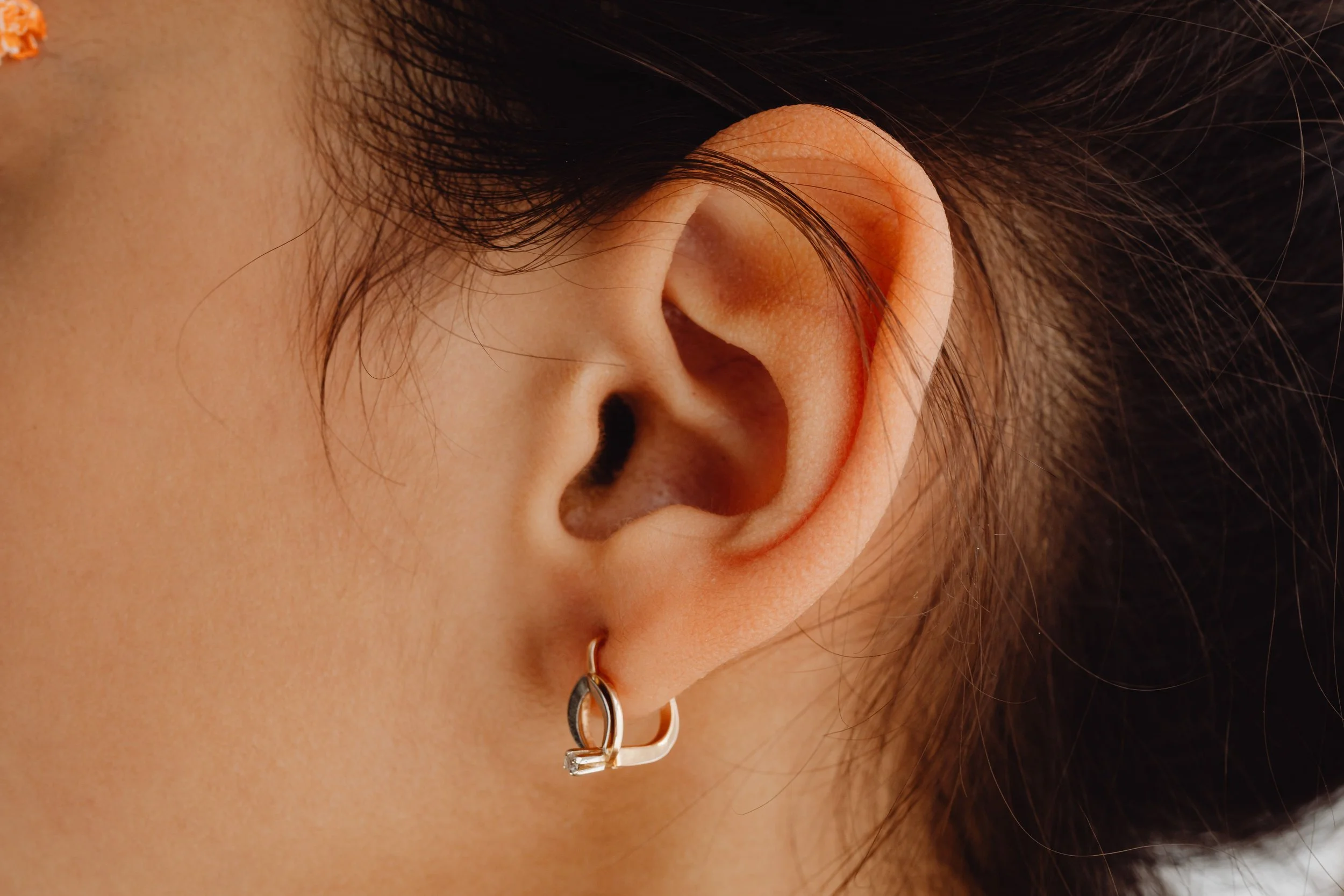
Ear Lobe Repair
Ear lobe repair is a minor surgical procedure to correct a torn, split, stretched, or deformed ear lobe. It is performed under local anaesthetic in clinic and takes approximately 30-60 minutes. Most patients return to normal activities the same day.
The ear lobe is one of the most commonly injured areas of the face. Damage can occur gradually over time or suddenly as the result of trauma. Regardless of the cause, the deformity is correctable in the vast majority of cases with a straightforward surgical repair.
Torn or split ear lobes: The most common reason for repair. A split occurs when a piercing hole gradually elongates downward under the weight of heavy earrings until it reaches the edge of the lobe, or tears suddenly following trauma, such as an earring being caught on clothing, hair, or pulled by a child.
Stretched or gauged ear lobes: Deliberate stretching of the piercing hole using progressively larger plugs or gauges is popular but can result in a large, permanently stretched opening or a thinned, floppy lobe that cannot hold standard earrings. Repair is possible but more involved than a simple split repair, and the extent of correction achievable depends on the degree of stretching.
Enlarged piercing holes: Over time, particularly with heavy or dangling earrings, a standard piercing hole can gradually enlarge without fully splitting. The hole may become elongated, slanted, or wide enough that earrings no longer sit properly or fall through the hole.
Traumatic tears: A sudden pull or catching of an earring can tear the lobe partially or completely. If assessed promptly, ideally within a few hours, a fresh traumatic tear may be repaired as an acute wound. Older or healed tears require the standard elective repair technique.
Common reasons for ear lobe repair
Before your ear lobe repair appointment:
Arrive with clean ears: remove any earrings and wash the area gently before attending
Avoid applying moisturiser, makeup, or topical products around the ear on the day
Inform the doctor of any medications you are taking, particularly blood thinners such as warfarin, aspirin, or clopidogrel. These may need to be paused before the procedure, but do not stop any regular medication without first checking with your prescribing doctor
Inform the doctor of any known allergies, particularly to local anaesthetic or antiseptic solutions
You do not need to fast before this procedure
What to expect during ear lobe repair:
The ear lobe is cleaned with an antiseptic solution
A small injection of local anaesthetic is administered into the lobe: you will feel a brief sting followed by numbness. The procedure itself should not be painful at all; tell the doctor immediately if you feel any discomfort
The edges of the split or defect are freshened by removing a thin layer of skin, this is essential because healed skin surfaces will not knit back together without this step. This is the key difference between a fresh traumatic tear and an old healed split
The freshened edges are carefully brought together and sutured in layers, usually with dissolving sutures beneath the skin and fine non-dissolving sutures on the surface to close the skin neatly
A small dressing is applied
For stretched or gauged lobes, the technique is more complex and involves removing excess tissue and reconstructing the lobe in a way that restores natural contour. Your doctor will explain the specific approach planned for you.
The procedure is performed as a straight excision and closure in most cases. In more complex repairs, a more intricate excision of tissue may be used to achieve a better cosmetic result and reduce the risk of notching along the lobe edge. Our doctor will decide the best course of action after your first consultation.
On the day of the procedure:
The ear will be numb for 1-3 hours as the local anaesthetic wears off
Some mild aching, throbbing, or tenderness is normal once sensation returns, this is usually well managed with paracetamol
There may be minor bleeding or oozing from the wound in the first few hours; apply gentle pressure with a clean gauze if needed
A small amount of swelling and bruising around the repair site is normal and settles within a few days
In the days following:
Keep the area clean and dry
Gently clean the suture line once daily with saline solution or as directed, and apply a thin layer of petroleum jelly (Vaseline) to keep the wound moist. Moist wounds heal with less scarring than dry ones
Avoid submerging the ear in water: no swimming, baths, or prolonged showering directly onto the area until sutures are removed
Sleep on the opposite side where possible to avoid pressure on the repair
Avoid wearing glasses frames that rest on or near the ear lobe if possible during the healing period
Suture removal:
Non-dissolving surface sutures are typically removed at 5-7 days for the face and ear. Your doctor will advise the timing at your appointment. Do NOT attempt to remove sutures yourself as this can greatly increase the risk of infection and failure. Only a healthcare clinician should remove sutures.
Frequently asked questions
-
All surgical repairs leave a scar. The goal of ear lobe repair is a fine, flat, well-healed scar that is largely inconspicuous: most patients find the result far preferable to the original deformity.
Scar maturation takes time. The scar will initially appear pink or red and may feel slightly firm. This is normal. Most scars soften, flatten, and fade significantly over 3-12 months.
To optimise your scar:
Keep the area out of direct sun for at least 3 months: UV exposure can cause a healing scar to darken permanently (post-inflammatory hyperpigmentation). Apply SPF 50+ if the area will be exposed
Once the wound is fully closed and sutures are out, silicone gel or silicone tape applied daily can help flatten and fade the scar. Ask your doctor when it is appropriate to start
Gentle massage of the healed scar (using a moisturiser or oil, once fully closed) for 5 minutes daily from about 4-6 weeks post-procedure can improve the texture and softness of the scar over time
Avoid nicotine: smoking significantly impairs wound healing and increases the risk of poor scarring
-
This is one of the most common questions patients ask. The short answer is yes, the ear lobe can be re-pierced after repair, but timing and placement are important.
Wait a minimum of 3 months after repair before re-piercing; ideally 6 months to allow full scar maturation
The new piercing should be placed through healthy, unscarred tissue, not through the scar itself, which is weaker and more prone to re-tearing
Your doctor or piercer will advise on the optimal placement
Begin with lightweight, simple stud earrings. Avoid heavy, dangling, or hoop earrings long-term, as these were likely a contributing factor to the original problem
Have piercing performed by a reputable professional using a sterile needle technique; avoid piercing guns, which cause more tissue trauma. We recommend Hallam Pharmacy, located across from YourSkin Clinic, as they perform sterile piercings by a pharmacist.
If you choose not to re-pierce, no further treatment is needed beyond standard scar care.
-
Bleeding: Minor bleeding is common in the first few hours. Significant or prolonged bleeding is uncommon. Apply firm pressure and contact the clinic on 02 8021 8200 if it does not settle.
Infection: Signs include increasing redness, warmth, swelling, discharge, or fever developing after the first 48 hours. Contact the clinic promptly if you suspect infection. A short course of antibiotics is usually sufficient treatment.
Wound dehiscence: The repair can occasionally open or pull apart. This is more likely if there is tension on the wound, early trauma, or poor healing. If this occurs, please contact the clinic. A small area may be managed conservatively; in some cases re-suturing is needed.
Notching: A small notch or indentation along the lobe edge can occur at the repair site, particularly if the wound edges were not perfectly aligned or if healing is uneven. Minor notching often improves with time; significant notching may require a minor revision procedure.
Asymmetry: The two lobes may not appear perfectly symmetrical after repair, particularly if only one side is treated. This is usually minor and acceptable to most patients. Discuss your expectations regarding symmetry with your doctor beforehand.
Keloid or hypertrophic scarring: Patients with a history of abnormal scarring are at higher risk of developing a raised, thickened scar following repair. Management options include silicone dressings, steroid injections, or in some cases further surgical revision. Inform your doctor if you have had keloid scarring in the past.
Recurrence: The repair can re-tear if heavy earrings are worn too soon, or if earrings are worn long-term without care. Protecting your repair with appropriate earring choices is the most important thing you can do to prevent the same problem recurring.
-
Ear lobe repair produces reliably good results in the vast majority of patients. The deformity is corrected, the lobe regains a natural contour, and the scar becomes inconspicuous over time for most people.
However, it is important to understand that:
The result is a repaired lobe, not a perfect lobe, a fine scar will always be present
Heavily stretched or gauged lobes have less tissue to work with and the achievable result may be more limited. Your doctor will be honest with you about what is realistic in your specific case
The lobe can be re-torn if care is not taken with earring choices going forward
Keloid-prone individuals face a higher risk of a less satisfactory scar outcome and should discuss this carefully before proceeding
This information is for general patient education only and does not replace advice from your treating clinician. Please speak with your doctor if you have specific questions about your procedure. Please call 000 if you are experiencing a medical emergency.