
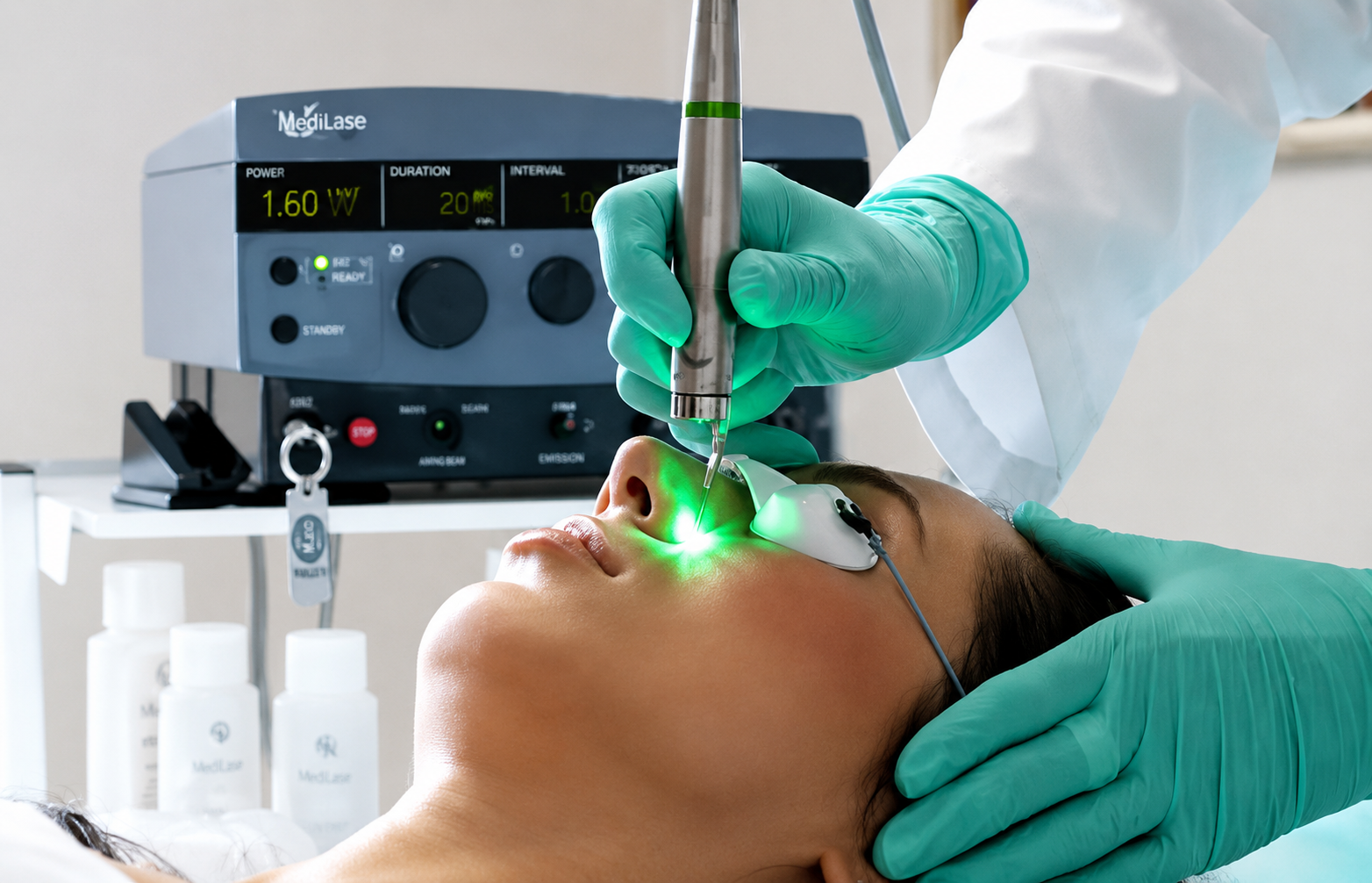
Vascular Laser
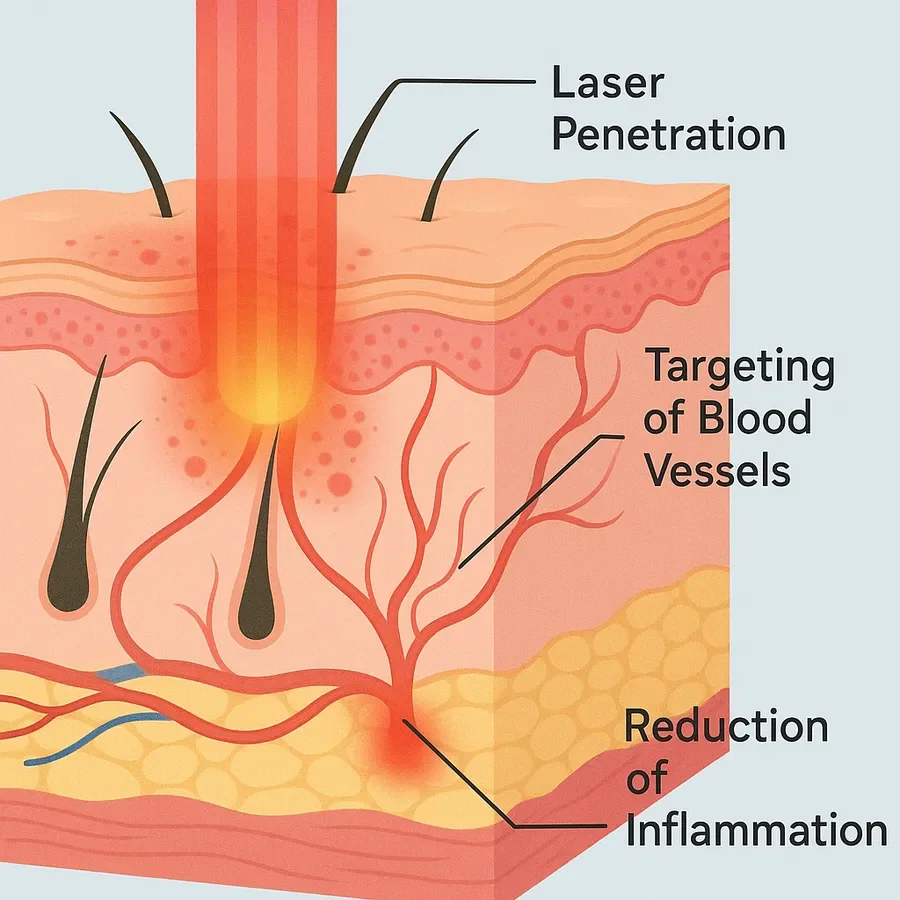
The VariLite is a dual-wavelength laser system designed to treat a range of vascular and pigmented skin lesions. It uses two wavelengths of light (532 nm and 940 nm). The laser works on the principle of selective photothermolysis: the light energy is absorbed by the target, either the haemoglobin in blood vessels or the melanin pigment in skin spots. The generated heat destroys unwanted cells or causes the vessel to close and be gradually absorbed by the body. Surrounding healthy skin tissue is left largely unaffected.
What can it treat?
Broken capillaries on the face
Cherry angiomas (small bright red dome-shaped spots)
Port wine stains and other vascular birthmarks such as Nevus Simplex
Poikiloderma of Civatte (mottled redness of the neck and chest from sun damage)
Dermatosis Papulosa Nigra
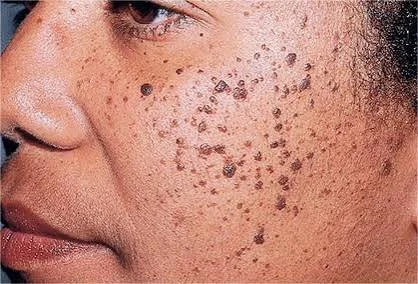
Dermatosis Papulosa Nigra
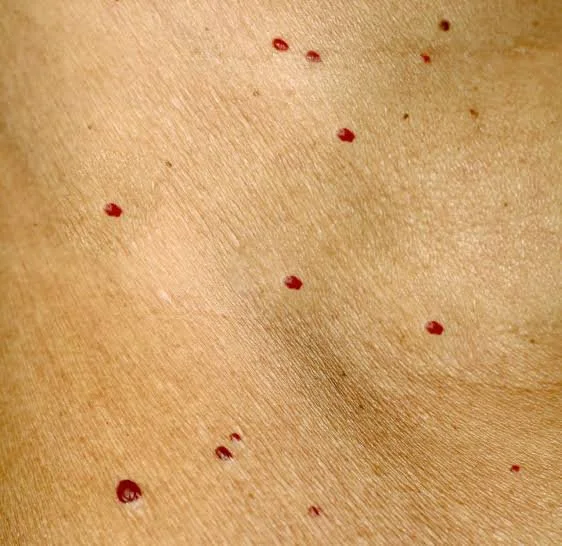
Angiomas
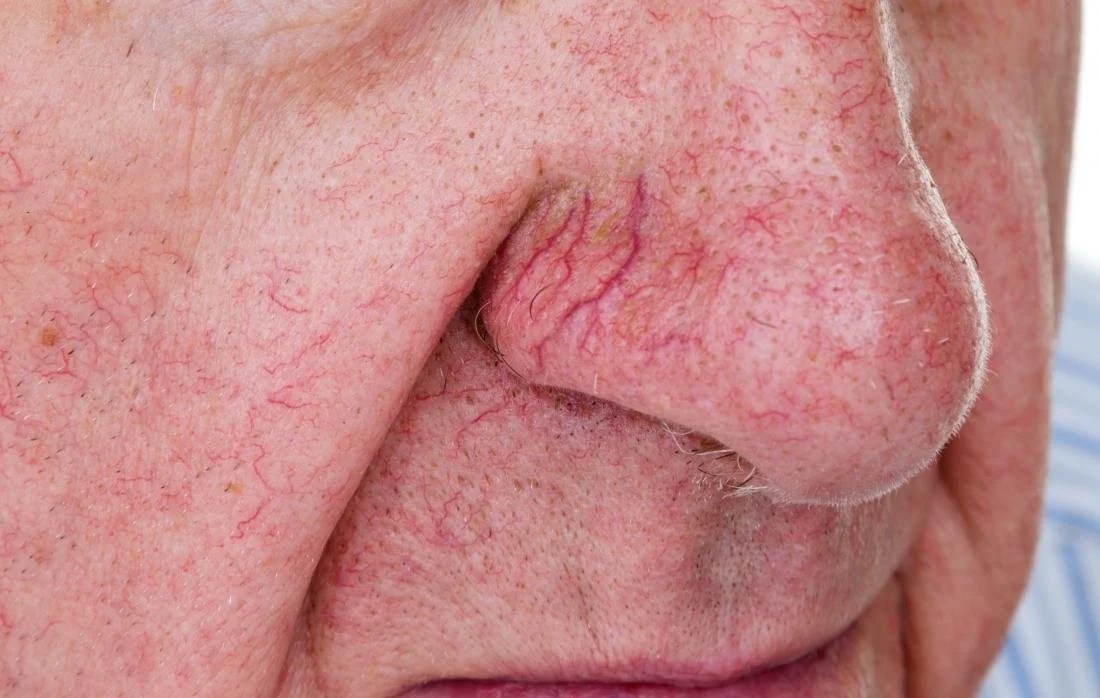
Broken capillaries
Before your appointment
Avoid sun exposure and fake tan to the treatment area for at least 4 weeks beforehand. Tanned skin increases the risk of side effects including burns and pigment changes
Stop any photosensitising medications (such as doxycycline or isotretinoin) as directed by your doctor. Please advise the clinic of all medications at booking
Avoid blood-thinning medications such as aspirin and ibuprofen for 48 hours before treatment if possible, to reduce bruising. Please check with your doctor before stopping any regular medication
Do not apply makeup, moisturiser, or topical products to the area on the day of treatment
Arrive with a clean, product-free face or treatment area
Inform your clinician if you have a history of cold sores. Any treatment around the mouth can trigger an outbreak and prophylactic antiviral medication may be recommended
What to expect
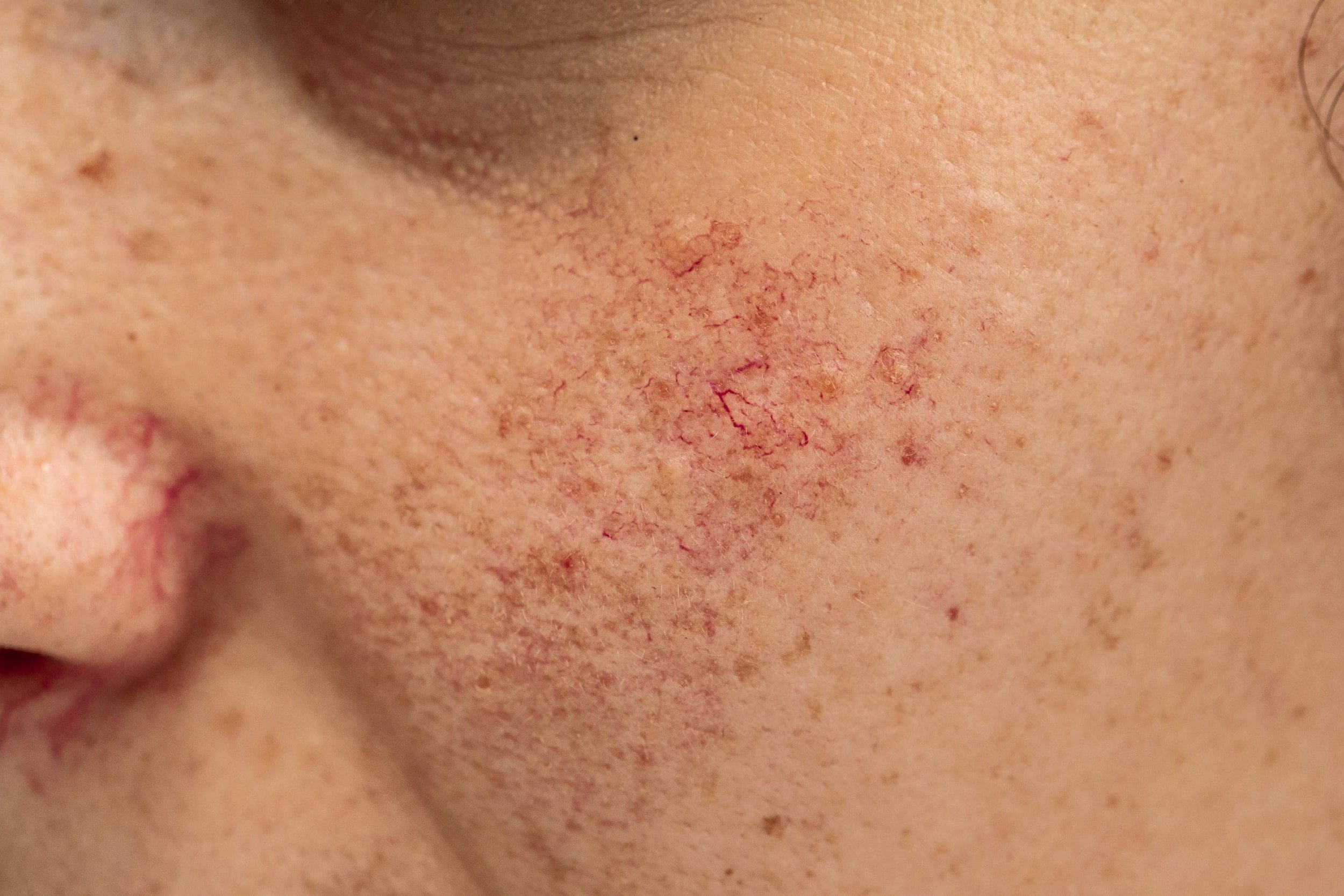
Broken capillaries
Your skin will be assessed and photographed for baseline comparison
Protective eyewear will be provided to you: this is essential and must be worn throughout the procedure
The treatment area is cleaned
The clinician guides the laser handpiece over the skin, delivering precise pulses of light to the targeted vessels or lesions
For facial veins and fine capillaries, the handpiece traces individual vessels; for larger areas such as rosacea, a painting or stamping technique is used
A cooling device or gel may be used to protect the surface skin and improve comfort
Sessions typically take 15–30 minutes for a focused facial area, or longer if multiple body areas are being treated.
Frequently asked questions
-
This depends on the type, size, and depth of the lesion being treated:
Small spider veins and broken capillaries: 1-3 sessions in most cases
Rosacea and diffuse facial redness: 2-4 sessions, spaced 4-6 weeks apart
Cherry angiomas: Often cleared in a single session
Age spots and freckles: 1-2 sessions
Port wine stains and haemangiomas: Multiple sessions are usually required; response is variable
Improvement is gradual. Vascular lesions typically darken immediately after treatment before fading over 2-6 weeks as the body absorbs the treated vessel. Pigmented spots often crust and flake off within 1-2 weeks.
-
Redness and warmth at the treatment site: this is expected and usually resolves within 2-4 hours
Mild swelling around treated vessels, particularly around the eyes or nose, lasting 1-2 days
Darkening of pigmented spots: lesions may appear darker or develop a fine crust before fading; do not pick or scratch these
Purpura (bruising): a purple or bruised appearance can occur, particularly with vascular treatments; this typically fades within 5-10 days
There is generally no open wound and no downtime; most patients return to normal activities the same day
-
Most side effects are mild and temporary. Less common risks include:
Post-inflammatory hyperpigmentation (PIH): darkening of the skin in the treated area, more common in patients with darker skin tones; usually fades over weeks to months with strict sun protection
Hypopigmentation: lightening of the skin; less common but can be more persistent
Blistering or crusting: may occur if the skin absorbs more energy than anticipated; heals without scarring in most cases if managed correctly
Scarring: rare with correctly performed treatment
Incomplete clearance: some vessels or lesions may not fully resolve and may require additional sessions or an alternative treatment approach
Reactivation of cold sores: in susceptible individuals
-
Results vary between individuals. Some respond well in a single session; others require further treatment.
-
Apply a gentle moisturiser or soothing gel to treated areas as needed
Avoid makeup on treated skin for 24 hours
Do not pick, rub, or scratch any crusting: allow it to shed naturally
Avoid heat exposure: hot showers, saunas, steam rooms, and exercise that causes significant flushing: for 24-48 hours after treatment
Avoid sun exposure to treated areas for a minimum of 4 weeks: apply SPF 50+ broad-spectrum sunscreen daily, even on cloudy days
Avoid waxing, chemical peels, or other active skin treatments on the treated area until fully healed
Stay well hydrated and keep the skin moisturised during healing
-
The VariLite is generally safe for a wide range of skin types, though your doctor will assess your suitability. Treatment may not be recommended if you:
Are pregnant
Have an active tan or very dark skin in the treatment area
Are taking photosensitising medications
Have a history of keloid scarring
Have active infection or broken skin in the treatment area
Have certain connective tissue disorders or blood-clotting conditions
Always disclose your full medical history and current medications at your consultation.
-
VariLite® laser treatment can be uncomfortable, and the level of discomfort varies between individuals and treatment areas. Most patients describe the sensation as a series of hot snaps or stings during each laser pulse, similar to a rubber band flicking against the skin.
Some areas, particularly around the nose, upper lip, and larger blood vessels, can be more painful than others.
The discomfort is usually brief and occurs only while the laser is being delivered. After treatment, temporary redness, warmth, swelling, or tenderness in the treated area is common.
Your doctor may advise you to apply numbing cream prior to your appointment which can be supplied at no extra cost. We also offer cold ice packs to manage pain.
Realistic expectations for VariLite
Treated vessels do not disappear straight away. Immediately after treatment, vascular lesions often look darker, redder, lighter, or slightly swollen: this is a sign the laser has worked. The body then gradually absorbs the destroyed vessel over the following 2-6 weeks. Pigmented spots may crust and darken before flaking off within 1-2 weeks.
Multiple sessions are usually needed: a single session is rarely sufficient for complete clearance. Most conditions require 2-4 treatments spaced 4-6 weeks apart, and some: particularly rosacea, port wine stains, and diffuse facial redness; may require ongoing maintenance.
Results will not be 100%: most patients achieve a 50-80% reduction in the appearance of treated lesions per course of treatment. Stubborn or deeper vessels may respond partially or require a different treatment approach altogether.
The VariLite treats existing vessels and lesions: it does not prevent new pigmentation from developing. Spider veins, rosacea, and pigmentation are influenced by genetics, sun exposure, hormonal changes, and lifestyle. Without sun protection and trigger management, recurrence is likely over time.
Results vary between individuals. Skin type, lesion depth, vascular anatomy, and how well you follow aftercare instructions all influence your outcome. What works quickly for one patient may take longer or respond less completely in another. Your clinician will reassess after each session and adjust accordingly.
Fair skin typically responds better. The contrast between the target (red vessel or brown pigment) and the surrounding skin makes the laser more precise and effective in lighter skin types. Patients with darker skin tones can still be treated successfully but require more conservative settings, which may mean more sessions for equivalent results.