
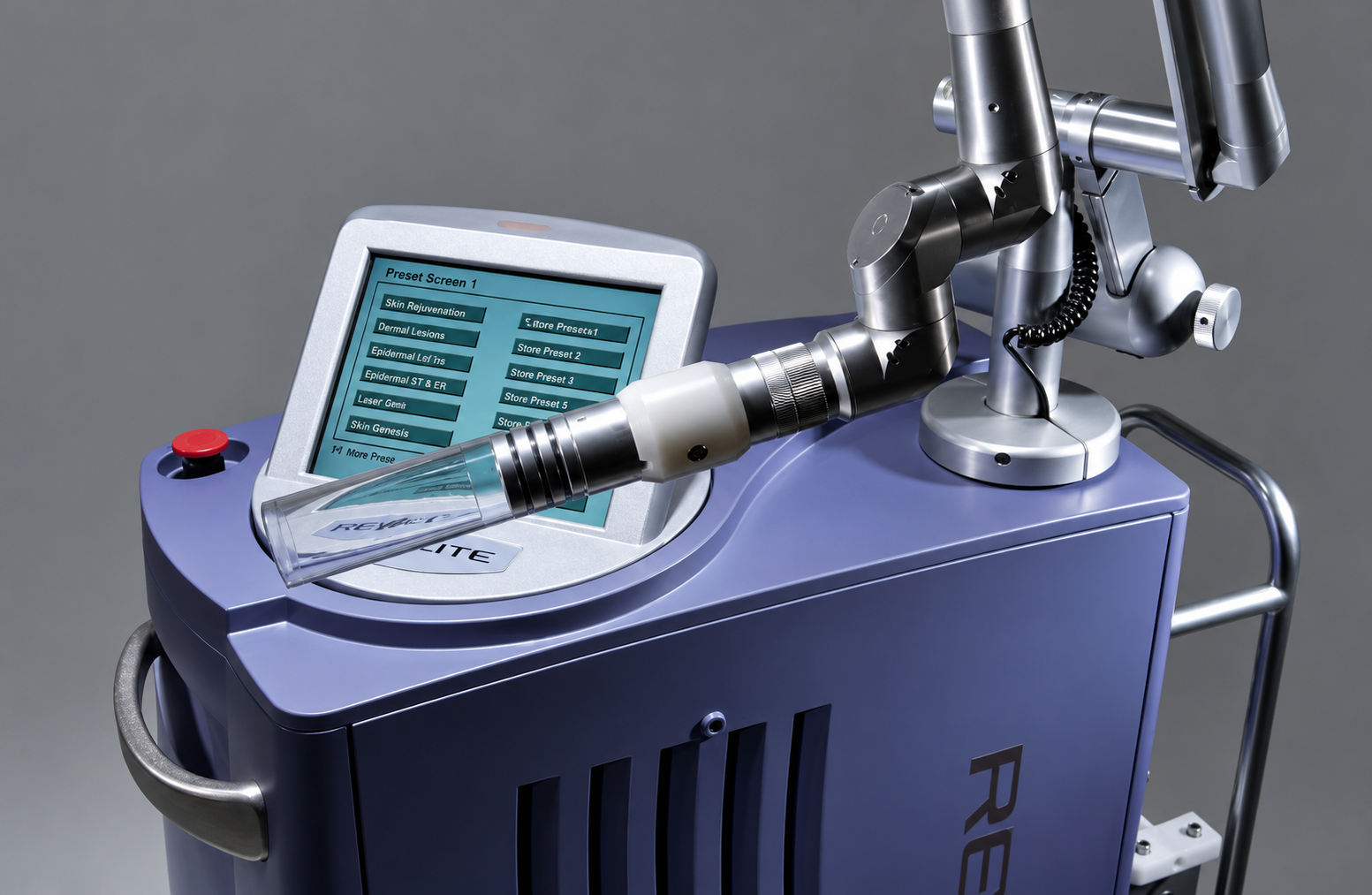
Laser Therapy
Skin tells the story of years in the sun, hormonal shifts, and the slow effects of time on collagen. The RevLite SI laser facial is one of the tools we use at YourSkin Clinic to work with that story rather than against it, targeting pigment and supporting the skin's own repair mechanisms with minimal disruption to daily life.
How the Revile SI works
RevLite SI is a Q-switched Nd:YAG laser. More specifically, it is a piece of technology capable of delivering energy in pulses measured in billionths of a second. At the low fluence settings used for a laser facial, those pulses pass over the skin's surface without breaking it. The skin you see and touch stays intact.
Two effects of the laser creates results.
A photoacoustic effect breaks down excess pigment sitting in the skin, which is what makes RevLite useful for sun spots, freckling, and some forms of melasma.
A photothermal effect gently warms the deeper tissue, prompting the skin to increase collagen production over the following weeks.
Neither effect requires cutting, peeling, or removing the outer skin layer.
A single session involves several passes of the laser handpiece across the treatment area, and most patients need a course of treatments rather than just one to see meaningful change. How many sessions, and how far apart, depends on your skin and what you're treating. That's a conversation for your consultation, not a one-size-fits-all answer.
What the Revlite SI laser can potentially address
Patients come to us for RevLite SI laser facials to work on uneven pigmentation and sun damage, mild redness and visible capillaries, enlarged pores, rough or dull texture, and fine lines. However, the Revlite SI is a tool for refinement and gradual improvement and not a substitute for sun protection or a guarantee against future pigmentation. How your skin responds depends on your skin type, the concern being treated, and how consistently you follow the aftercare your practitioner gives you.
Risks and side effects of laser therapy
No laser treatment is risk free, including the RevLite SI. The risks your clinician will talk through include:
Temporary redness, warmth, or mild swelling in the treated area, which is the most common reaction
Pinpoint bleeding or small bruises in some cases
Temporary changes in pigment, either lightening or darkening, which usually resolve but can occasionally persist longer than expected
Dryness or flaking as the skin recovers
Reactivation of cold sores in anyone with a history of herpes simplex
A risk of infection if the skin barrier is disrupted during treatment
A rare risk of scarring, more likely in those with a history of poor wound healing or keloid scarring Increased sensitivity to sunlight in the days following treatment
Some people aren't suitable candidates at all. Active skin infection, recent use of isotretinoin, pregnancy, certain photosensitising medications, and a personal or family history of keloid scarring are all reasons your practitioner might delay or decline treatment. A patch test is sometimes recommended before a full course begins. If anything unexpected shows up after treatment, blistering, unusual pain, or signs of infection, contact the clinic without delay.
Frequently asked questions
-
Most patients describe the sensation as a warm prick or a light snapping feeling against the skin. Topical numbing isn't usually needed, though sensitivity varies from person to person and your practitioner can adjust settings if a particular area feels uncomfortable. Some patients feel sensitivity around the nose and lip area. For tattoo removal, we recommend local anesthesia for patients with low pain tolerance.
-
There's no fixed number that applies to everyone. Pigmentation, redness, and texture concerns respond at different rates, and skin type plays a role too. Your clinician will recommend a course based on what you're treating and review progress as you go, rather than committing you to a set number upfront.
-
Expect some redness for a few hours after your session, occasionally longer. Most people return to normal activities the same day, though we still recommend avoiding direct sun and strenuous exercise for the first 24 to 48 hours.
-
Laser facials address existing pigment and support collagen production, but they don't stop new sun damage or the natural ageing process. Ongoing sun protection and, in many cases, periodic maintenance sessions are part of keeping results over time.
Disclaimer: This information is for general educational purposes and does not constitute individual medical advice. Always consult with a qualified health professional regarding your specific health needs.