
Broken Capillaries
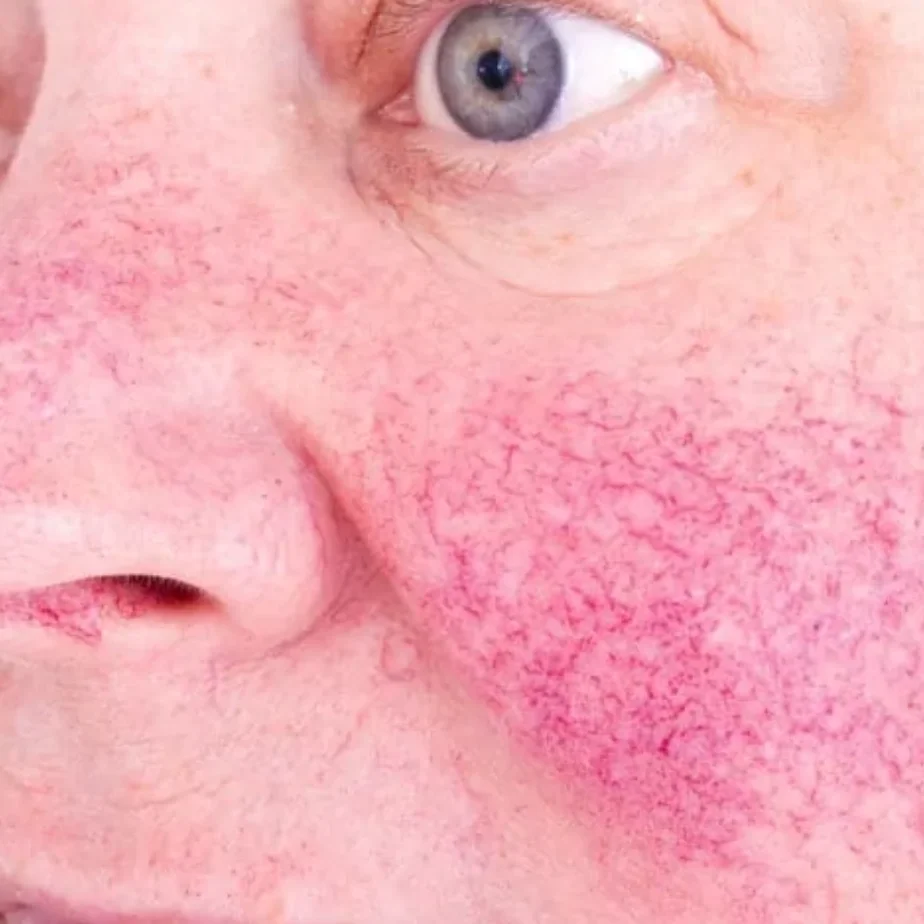
Broken facial capillaries are small, dilated blood vessels visible near the skin's surface, typically appearing as red, pink, or purple thread-like lines on the face.
-
Sun damage: UV exposure weakens vessel walls over time
Rosacea: chronic skin condition that causes persistent flushing
Aging: skin thins and vessels become more fragile
Temperature extremes: repeated exposure to hot or cold
Alcohol consumption: causes repeated vessel dilation
Trauma or injury: squeezing pimples, vigorous rubbing
Genetics: family history increases risk
Hormonal changes: pregnancy, menopause, or oral contraceptives
Certain medical conditions: liver disease, connective tissue disorders
-
Most commonly on the nose, cheeks, and chin. They can occur as isolated vessels or in clusters.
-
Generally not dangerous, they are typically a cosmetic concern in most cases. However, widespread or sudden onset telangiectasia can occasionally signal an underlying condition worth investigating with your doctor.
-
Laser therapy (IPL, Nd:YAG) uses light energy to collapse the vessel. This option is best suited for most facial areas.
Most treatments require 1–3 sessions and have minimal downtime. Results are typically permanent, though new capillaries can form.
-
Apply broad-spectrum SPF 30+ sunscreen daily
Avoid extreme heat (hot showers, saunas, spicy foods)
Limit alcohol
Use gentle skincare: avoid harsh scrubbing or abrasive products
Manage rosacea with a dermatologist's guidance
Wear a hat and seek shade outdoors
-
Sudden widespread appearance with no obvious cause
Associated with other symptoms (fatigue, joint pain, unusual bruising)
If you'd like to discuss treatment options