
Sebhorrheic Keratoses
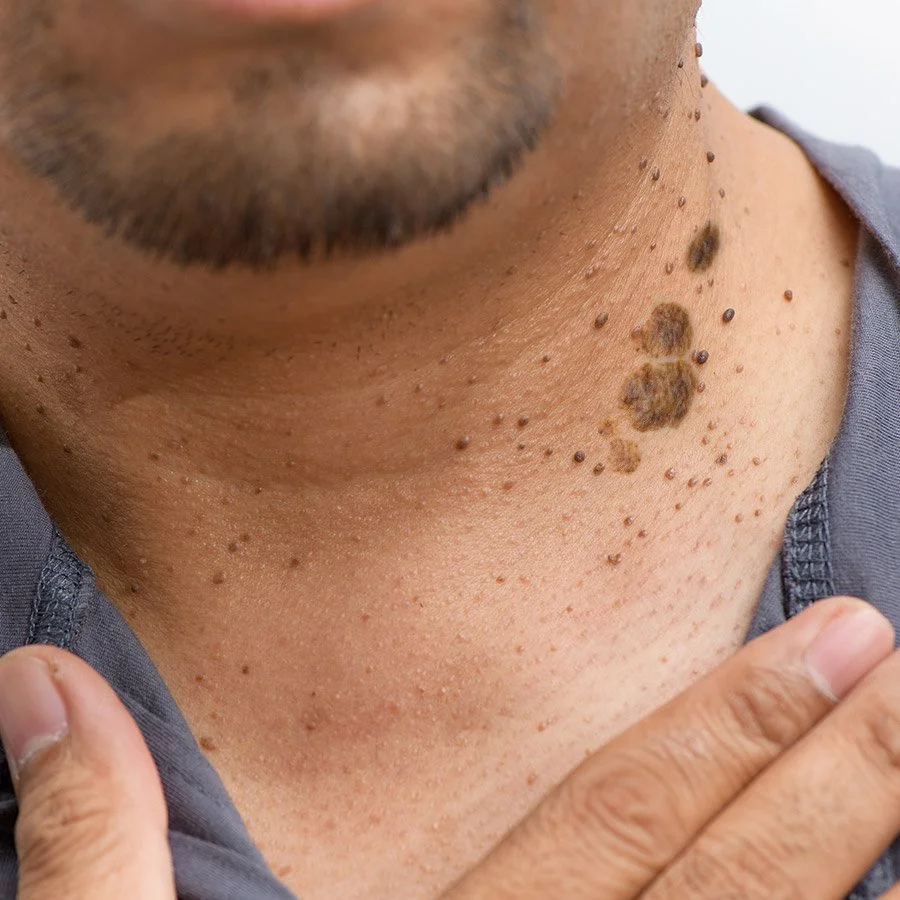
Have you noticed a rough, raised, or waxy spot on your skin?
Seborrhoeic keratoses are common benign skin growths that often develop with age. They can vary in colour and size and may appear on the face, chest, back, or other areas of the body.
While these lesions are generally harmless, some people seek medical assessment if they become irritated, catch on clothing, change in appearance, or if there is uncertainty about the diagnosis.
Because not all skin lesions are seborrhoeic keratoses, it is important to have any new, changing, or concerning spots assessed by a suitably qualified health practitioner.
This information is general in nature and is not a substitute for individual medical advice. A consultation is required to determine an appropriate diagnosis and whether any management options are suitable for your circumstances.
-
They can vary quite a bit in appearance but typically:
Look stuck on the skin, like a piece of brown, tan, or black wax or barnacle
Range from a few millimetres to several centimetres in size
Have a rough, warty, or velvety texture
May appear flat at first, then become raised and thickened over time
Can occur anywhere on the body except the palms and soles. Most commonly on the face, chest, back, and shoulders
-
No. Seborrhoeic keratoses are completely benign and do not turn into skin cancer. However, it is important that any new or changing spot be checked by a doctor, as they can sometimes resemble more serious conditions like melanoma.
-
The exact cause isn't fully understood, but they tend to run in families and become more common and numerous with age. Sun exposure may play a role, though they can appear in sun-protected areas too.
-
No treatment is necessary unless they are causing problems such as:
Irritation or itching from clothing rubbing against them
Bleeding from scratching
Cosmetic concern
-
If removal is desired, your doctor may recommend one of the following options:
Cryotherapy (freezing): liquid nitrogen is applied to freeze and destroy the growth
Electrotherapy (diathermy): a small electric current is used to burn off the lesion
Shave biopsy: the lesion is numbed and shaved off at skin level with a blade, which also allows the tissue to be examined under a microscope
-
See your GP or dermatologist if a lesion:
Changes rapidly in size, shape, or colour
Bleeds without obvious cause
Looks very different from your other keratoses
You are simply unsure about
YourSkin Clinic offers bulk billed skin checks for pension card holders (as of may 2026).