
Torn Ear Lobes
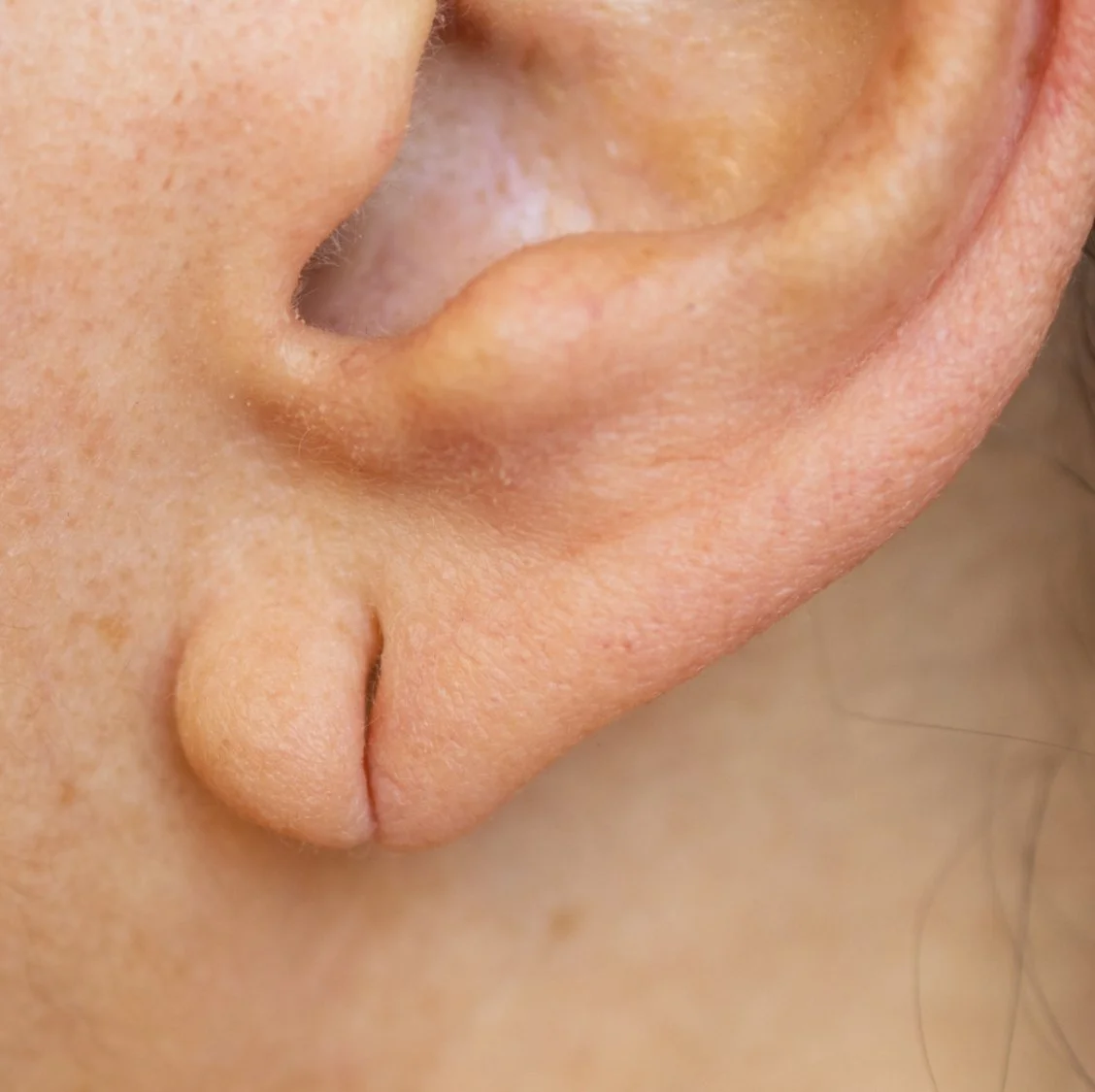
A torn earlobe (also called an earlobe laceration, split earlobe, or earlobe cleft) is a partial or complete division of the earlobe tissue. It ranges from a mildly stretched or elongated piercing hole through to a complete split of the earlobe into two separate sections. Earlobes are composed of soft fatty tissue covered by skin. They have no cartilage, which makes them relatively easy to injure but also generally straightforward to repair. They have a good blood supply, which supports healing.
Torn earlobes are very common, entirely benign, and in most cases very successfully repaired with a minor surgical procedure.
-
Type 1:
Stretched/Elongated Piercing: The piercing hole is widened but intact; no visible split
Type 2:
Partial Tear: A split or cleft extending partway through the earlobe; the lobe is not completely divided
Type 3:
Complete Tear: The earlobe is fully split into two pieces from the piercing hole to the bottom edge
Type 4:
Gauge Plug Stretching: Deliberate progressive stretching creating a large hole; may involve significant tissue loss
Type 5:
Traumatic Avulsion: Forcible tearing away of earlobe tissue, sometimes with tissue loss; less common
-
Gradual / Chronic Causes (Most Common)
Heavy earrings worn over many years: the most common cause; gravity slowly enlarges and elongates the piercing hole
Large or hoop-style earrings that catch on clothing, hair, or accessories
Sleeping in earrings: repeated pressure and movement gradually stretches the hole
Deliberate gauge stretching: progressive stretching with increasingly large plugs or tunnels
Acute / Traumatic Causes
Earring caught and pulled-on clothing (polo necks, scarves), hair, towels, hairbrushes, or seat belts
Earring grabbed by a child or during play or sport
Falls or accidents where an earring is forcibly displaced
Contact sports such as rugby, wrestling, and martial arts
Contributing Factors
Thin or ageing earlobes: skin and soft tissue lose volume and elasticity with age, making the lobe more vulnerable
Multiple piercings close together: reduces tissue between holes, weakening the lobe
Piercings placed too close to the edge of the earlobe: leaves insufficient tissue to bear the weight of jewellery
Infection at a piercing site: weakens and damages surrounding tissue
Keloid scarring around a piercing: can alter tissue integrity
-
Most torn earlobes cause no pain once the initial injury has settled. People typically present because of the appearance or because they can no longer wear earrings.
Symptoms may include:
A visible split, cleft, or elongated hole in the earlobe
Complete division of the earlobe into two separate portions
Inability to wear standard earrings (they fall through or sit incorrectly)
Mild tenderness if the tear is recent or if there is inflammation
Thickened or scarred edges around an old tear
In gauge stretching: a large open tunnel that does not close on its own
There is generally no associated hearing loss, nerve damage, or systemic symptom with earlobe tears. If significant pain, swelling, warmth, or discharge is present, infection should be considered.
-
This depends on the degree of injury. Beyond very minor stretching, torn earlobes require treatment to restore normal appearance and function.
Stretched or mildly enlarged holes: very small early stretches may partially reduce if earrings are removed and the piercing is rested, but significant enlargement will not self-correct.
Partial tears: will heal with scar tissue, but the resulting scarred cleft will not close or reshape without treatment. The healed edge may be thickened or irregular.
Complete tears: the two edges will each heal over independently with skin, resulting in a permanent split. They will not fuse back together without surgical intervention.
Gauged earlobes: a small amount of shrinkage may occur if plugs are removed early in the stretching process, but large gauge holes (generally above 10mm) will not close meaningfully without surgery.
-
The procedure follows the same core principle regardless of technique: the healed skin lining the tear is removed to create fresh wound edges, and those edges are then sutured together in layers.
Performed under local anaesthetic as a day procedure; takes approximately 20 to 45 minutes
The skin lining the cleft is precisely excised (removed) to create raw tissue edges that will bond when sutured
The earlobe is then carefully sutured in layers, restoring the natural shape
Dissolvable or non-dissolvable sutures are used depending on surgeon preference; non-dissolvable sutures are typically removed at 7 to 14 days
The earlobe is reshaped to restore a smooth, natural contour