
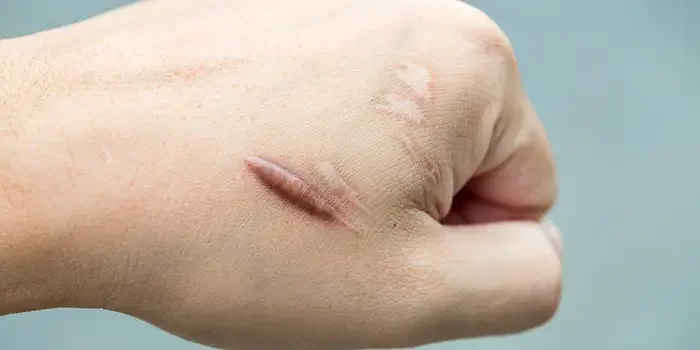
Scarring
A scar is the body's natural response to skin injury. When the deeper layer of skin (the dermis) is damaged, the body produces collagen fibres to repair the wound. This repair tissue looks and feels different from normal skin. Compared to normal skin, scars are usually less flexible, may be a different colour, and lacks hair follicles and sweat glands.
Generally, any skin injury can cause a scar, including cuts, burns, surgery, acne, or infection.
Frequently Asked Questions
-
Flat/Pale Scars: The most common type. Initially pink or red, they gradually fade to a pale, flat mark over 1–2 years. Most surgical scars fall into this category.
Hypertrophic Scars: Raised, red, and firm scars that remain within the boundary of the original wound. They may improve on their own over time (often over 12–18 months).
Atrophic Scars: Sunken or "pitted" scars, common after acne or chickenpox, where tissue has been lost rather than overproduced.
Contracture Scars: Often result from burns; the skin tightens and contracts, potentially affecting movement if over a joint.
Keloid Scars: Raised scars that grow beyond the original wound boundary. These do not resolve on their own and are the focus below.
-
Keloids are significantly more common in:
People with darker skin tones (10–15× more prevalent in people of African, Hispanic, and Asian descent)
Those with a family history of keloids (there is a clear genetic component)
People aged 10–30 years (less common in the very young or elderly)
Areas of high skin tension: chest, shoulders, upper back, earlobes, and jaw
Anyone can develop a keloid, but the above factors substantially increase risk.
-
Corticosteroid Injections
Most widely used first-line treatment
Triamcinolone acetonide injected directly into the scar
Reduces inflammation, flattens, and softens the keloid
Typically given every 4–6 weeks for several sessions
Effectiveness: ~50–80% show improvement; recurrence is possible
Side effects: Skin thinning (atrophy), depigmentation (lightening of skin around injection site), pain during injection, telangiectasia (visible small vessels)
Silicone Gel Sheets / Gels
Applied directly to the scar daily (usually 12+ hours/day for 3–6 months)
Hydrates the scar tissue and may reduce collagen overproduction
Best evidence for prevention and early/flat scars; modest effect on established keloids
Very safe; suitable as a standalone or adjunct treatment
Available over the counter
Surgical Excision
Physical removal of the scar tissue
High recurrence rate (45–100%) when used alone: keloids frequently return larger after surgery
Usually combined with other treatments (radiotherapy, steroid injections) immediately post-surgery to reduce recurrence
Reserved for large or functionally limiting keloids
-
See your GP if:
A scar is growing beyond the original wound boundary
A scar is causing significant pain, itch, or restricted movement
A scar is affecting your mental health or quality of life
You are unsure whether a lesion is a keloid or something else
Some scars may require a referral to a plastic surgeon for surgical treatment.
Dr. Scott explains keloid scars