
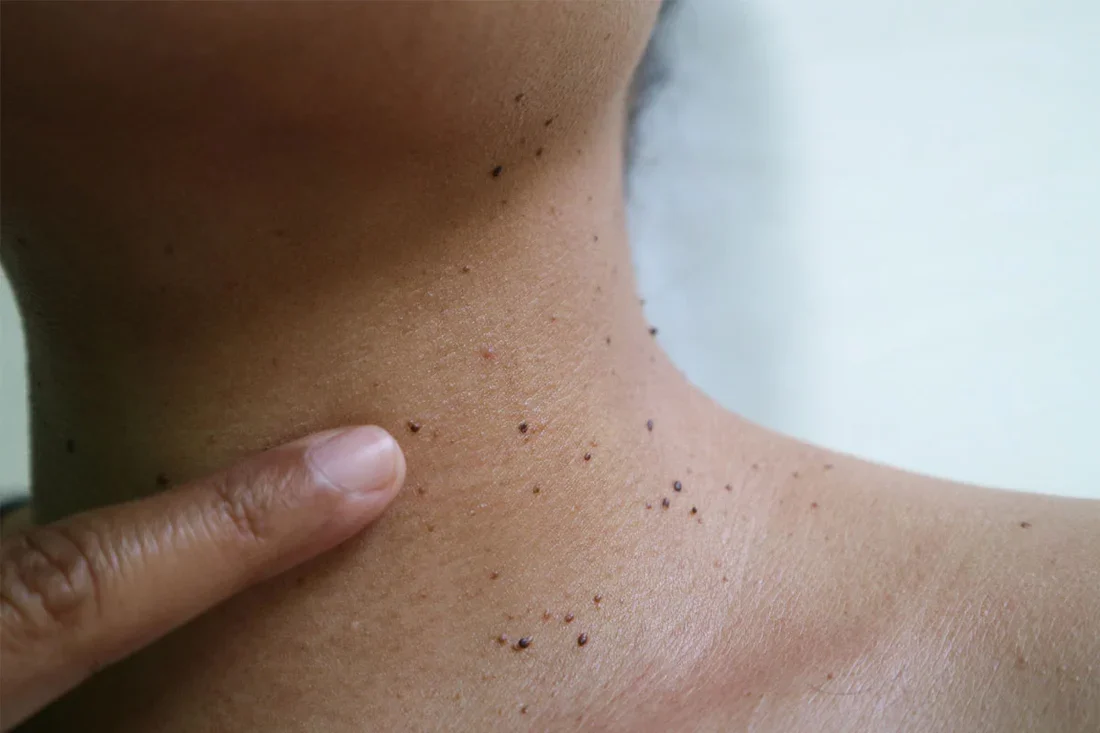
A skin tag is a small flap of tissue that forms on the surface of the skin. It is usually attached by a thin stalk called a peduncle. Skin tags are made of normal skin components such as collagen fibres, small blood vessels and skin cells. They are soft to touch and usually match the surrounding skin colour.
Skin Tags
This material is intended for general educational purposes and is produced in accordance with the Therapeutic Goods Advertising Code 2021 (Cth). No specific therapeutic goods (including prescription medicines or medical devices) are named or promoted in this document. Treatment suitability is determined only after individual clinical assessment. YourSkin Clinic practitioners are registered with the Australian Health Practitioner Regulation Agency (AHPRA).
Treatments involving prescription medicines may only be recommended and supplied following a valid prescription issued by an authorised prescriber. Not all treatments described will be suitable for all individuals. Results are not guaranteed and vary between patients.
What are Skin Tags?
Skin tags, medically known as acrochordons, are small, soft growths of skin. They most commonly develop in areas where skin folds or rubs against itself or clothing, such as the neck, underarms, eyelids and groin. They are usually skin coloured, brown or red, and typically measure a few millimetres, though larger tags can occasionally occur.
Why Do They Occur?
The exact cause isn't fully understood, but skin tags are thought to develop due to friction between skin folds, along with genetic and hormonal factors. They tend to become more common with age, as skin loses some elasticity over time.
Who Is More at Risk?
Skin tags affect men and women equally. They're seen more often in people who are older, have a family history of skin tags, or are living with obesity, diabetes or other metabolic conditions. They can also appear during pregnancy due to hormonal changes.
What Can They Be Confused For?
Skin tags can sometimes resemble other skin growths, including warts, moles, seborrhoeic keratoses and, less commonly, more serious lesions. Because of this, any new or changing growth should be assessed by a qualified practitioner to confirm what it is.
Frequently Asked Questions
-
Skin tags can appear anywhere but are most common in areas where skin rubs on skin or clothing.
Neck
Underarms
Groin
Under the breasts
Eyelids
Upper chest
They can occur in both men and women and at any age, although they are more common in adults.
-
The exact cause is not fully understood. Several factors are known to increase the likelihood of developing skin tags.
Friction from skin folds or clothing
Genetics which may make some people more prone
Hormonal changes such as pregnancy
Ageing since they become more common over time
Higher body weight which increases skin folds
Insulin resistance which is associated with a higher number of skin tags
Not everyone with these factors will develop skin tags.
-
Skin tags usually have the following features.
Soft and flexible
Painless
Flesh coloured or slightly darker
Smooth or slightly wrinkled
Attached by a thin stalk
Range in size from a few millimetres to several centimetres
They do not usually grow quickly.
-
Most skin tags cause no symptoms. Some people notice:
Irritation from clothing or jewellery
Mild discomfort if the tag is pulled or twisted
Cosmetic concern if the tag is in a visible area
A skin tag that suddenly becomes painful, changes colour or bleeds should be checked by a doctor to rule out other conditions.
-
A doctor can usually diagnose a skin tag by examining it. Tests are rarely needed. If the appearance is unusual or if there is uncertainty, a doctor may recommend a biopsy to confirm the diagnosis.
-
A new growth that does not look like your usual skin tags
Rapid change in size or colour
Bleeding or persistent pain
A growth on the eyelid that affects vision
Uncertainty about whether the lump is a skin tag or another condition
-
A shave biopsy is a technique where a doctor uses a sterile blade to gently shave off the raised part of a skin lesion. It does not involve cutting deeply into the skin. The goal is to remove the surface growth while keeping the surrounding tissue intact.
Shave biopsy is commonly used for benign raised lesions including skin tags.
-
A doctor may recommend a shave biopsy when:
The skin tag is catching on clothing or jewellery
The skin tag is irritated or bleeding
The patient prefers removal for comfort or appearance
The doctor wants to confirm the diagnosis by sending the tissue to pathology
A shave biopsy allows the removed tissue to be examined under a microscope if needed.
-
Assessment The doctor examines the lesion to confirm that it appears consistent with a skin tag.
Cleaning the area The skin is cleaned with an antiseptic solution to reduce the risk of infection.
Local anaesthetic A small amount of local anaesthetic may be used to numb the area. Some very small skin tags can be removed without anaesthetic if appropriate.
Shaving the lesion A sterile blade is used to shave the skin tag at the level of the surrounding skin.
Bleeding control Mild bleeding is common and is usually controlled with an electrothermy device.
Dressing A small dressing may be applied to protect the area while it heals.
-
Most patients experience only mild discomfort. The area may feel tender for a short time. Healing usually occurs within one to two weeks depending on the size and location of the skin tag.
Common experiences include:
Mild redness
A small scab
Temporary skin colour change
-
Shave biopsy is considered low risk. Possible complications include:
Minor bleeding
Infection
Scarring
Temporary or permanent change in skin colour
Recurrence if a small portion of the tag remains
Contact a doctor if you notice:
Increasing redness or swelling
Pus or discharge
Fever
Persistent bleeding
Pain that is worsening rather than improving
These symptoms may indicate infection or another issue that requires review.
-
If the doctor considers it appropriate, the removed tissue may be sent to a pathology laboratory. This helps confirm that the lesion is a benign skin tag and not another type of growth.
YourSkin Clinic uses Douglass Hanly Moir in Edgecliff Centre.