
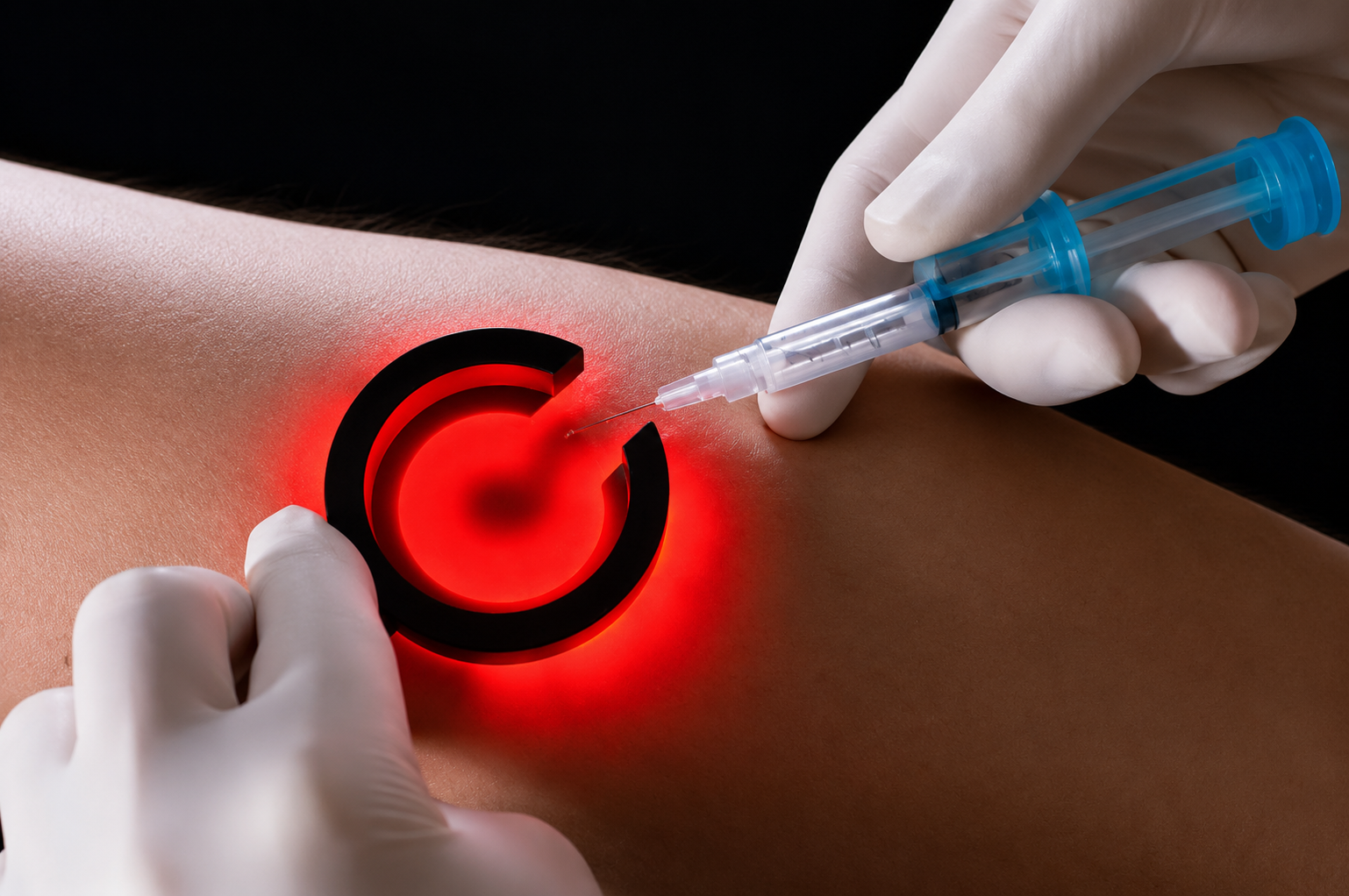
Sclerotherapy
Sclerotherapy is a procedure used to treat spider veins and small varicose veins. A solution called a sclerosant is injected directly into the affected vein, causing it to swell, seal shut, and gradually fade. The treated vein is absorbed by the body over several weeks and blood naturally reroutes through healthier vessels nearby.
What can sclerotherapy potentially treat?
Sclerotherapy may be used to treat:
Spider veins (telangiectasias): small red, blue, or purple vessels visible just under the skin
Reticular veins: larger feeder veins that often supply spider veins
Small varicose veins: bulging, rope-like veins close to the surface
Suitability for treatment is assessed individually during consultation with our specialist general practitioner.
Potential risks of sclerotherapy
Sclerotherapy comes with the risk of short-term side effects, even when completed by a trained medical practitioner. See more on side effects.
Before your appointment
Avoid shaving or applying moisturiser to your legs on the day of treatment
Wear or bring loose, comfortable clothing; you will need to expose your legs
Avoid anti-inflammatory medications (such as ibuprofen or aspirin) for 48 hours beforehand if possible, as these can increase bruising. Check with your doctor first
Arrange to walk for 15-30 minutes after the procedure, so plan your transport accordingly
Do not book the procedure close to a holiday or event where you need your legs looking their best; results take weeks to appear
What to expect
You will lie on a treatment table with your legs elevated
The skin is cleaned with an antiseptic solution
A very fine needle is used to inject the sclerosant solution into each targeted vein. Multiple injections are usually given in a single session
Light pressure is applied after each injection
Compression bandaging or stockings are applied at the end of the session
Each session typically takes 20-45 minutes depending on the number of veins being treated. Local anaesthetic is not usually required, though you may feel a mild stinging or cramping sensation with each injection.
Frequently asked questions
-
Most patients require between 2 and 4 sessions to achieve a satisfactory result, spaced 4-6 weeks apart. The number depends on the extent and size of the veins being treated. Smaller spider veins tend to respond faster than larger reticular veins.
Results are gradual: veins do not disappear immediately. Most treated veins fade significantly over 3 to 6 weeks, though larger vessels can take up to 3 to 4 months to fully resolve.
-
In the first 24-48 hours:
Wear your compression stockings continuously as directed, usually 24 hours a day for the first 2 days, then during the day for a further 1-2 weeks
Walk for at least 15-30 minutes immediately after the procedure and each day during recovery. Walking is important and helps prevent complications
Avoid prolonged sitting or standing still
Avoid strenuous exercise, heavy lifting, and high-impact activity for at least 1 week
In the following weeks:
Avoid hot baths, saunas, spas, and direct sun exposure to the treated area for at least 2 weeks. Heat causes vessels to dilate and can reduce the effectiveness of treatment
Avoid swimming for 1-2 weeks
Apply SPF 50+ sunscreen to treated areas when outdoors to prevent post-treatment pigmentation
-
Bruising: common around injection sites; fades over 1–2 weeks
Redness or raised areas: small hives or wheals at injection sites, usually settling within a few hours
Darkening of the skin (hyperpigmentation): a brownish discolouration along the treated vein; occurs in up to 30% of patients and usually fades over 3–12 months, though in rare cases may be permanent
Matting: a fine blush of tiny new vessels around the treated area; usually temporary but may require additional treatment
Trapped blood (haematoma): a small, firm lump along the treated vein; not dangerous and can be drained at a follow-up appointment if needed
-
Serious complications are uncommon but include:
Allergic reaction: rare; symptoms include hives, swelling, or difficulty breathing. Seek emergency care immediately if this occurs
Ulceration: if the sclerosant leaks outside the vein, a small skin ulcer may form; this generally heals but can leave a scar
Deep vein thrombosis (DVT): a blood clot in a deep vein; rare with sclerotherapy of superficial veins; risk is reduced by walking after treatment and wearing compression
Visual disturbances: temporary visual changes have been reported, particularly with foam sclerotherapy; these are generally brief and resolve without treatment
Contact the clinic promptly or seek emergency care on 000 if you develop: significant leg swelling, redness tracking up the leg, chest pain, shortness of breath, or visual changes.
-
Sclerotherapy improves the appearance and symptoms of treated veins but does not prevent new veins from forming. Spider and varicose veins are influenced by genetics, hormones, pregnancy, and prolonged standing, so new vessels can appear over time. Maintenance sessions may be needed in future years.
Results vary between individuals. Some veins respond well in a single session; others are more stubborn. Your doctor will reassess at each visit and adjust the treatment plan accordingly.
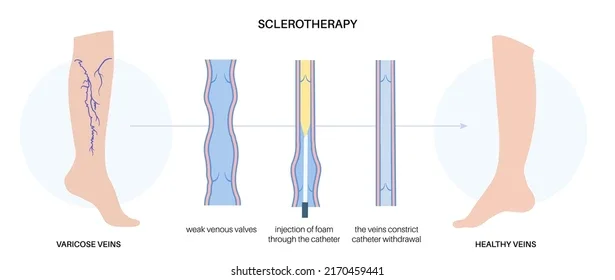
Protentional side effects of sclerotherapy
If you've previously had a deep vein clot (thrombosis) in your leg, you may not be suitable for treatment. Our doctor will discuss this with you. There's some suggestion that taking the oral contraceptive pill or hormone replacement therapy (for menopause symptoms) during treatment increases the risk of deep vein thrombosis, though the evidence is weak and this is probably not a reason to stop these medications during treatment. People who smoke also have a slightly increased risk.
PIGMENTATION
Brown marks can appear on the skin along the line of a treated vein. Studies show this occurs in up to 16% of patients at 6 months and 5% at 2 years. The marks are mainly haemosiderin (a form of iron stored in the blood), left behind as blood breaks down within the treated vein. It's more common in patients with larger treated veins or significant bruising. Pigmentation usually clears completely within a year. Persistent pigmentation may respond to laser treatment.
MATTING
Matting is the appearance of fine red blood vessel networks near injection sites of larger veins, most often on the thighs. Most cases resolve on their own, some respond to further injection treatment, and a few persist. Matting is more common in patients with extensive surface veins, underlying deep vein problems, a family history of surface veins, obesity with poor muscle tone, or those who haven't had reticular veins treated before spider veins.
ULCERS
Occasionally, small, painful ulcers can form at a treatment site within two weeks of injection. This may happen if the solution leaks into surrounding skin, or if there's an abnormal connection between the injected veins and nearby arteries. Ulcers are more common in smokers, heal slowly, and may leave a small pale scar.
ALLERGIC REACTIONS
Serious allergic reactions are rare, occurring in around 1 in 5,000 cases, and can usually be treated effectively with an immediate adrenaline injection. Less serious reactions are treated with antihistamines. Minor rashes don't need specific treatment, but you should let your doctor know if one occurs. Rarely, gum inflammation (gingivitis) can occur as a reaction to a specific sclerosing solution. If this happens, a different solution can be used for future treatments.
DEEP VEIN THROMBOSIS (CLOT IN A DEEP VEIN)
This can occur but is uncommon if compression stockings and regular daily walking are followed as advised. Patients should also avoid flying post-treatment.
INTRA-ARTERIAL INJECTION
This is an extremely rare complication that may cause muscle and skin damage.
There are no known long-term side effects of sclerotherapy.