
Milia
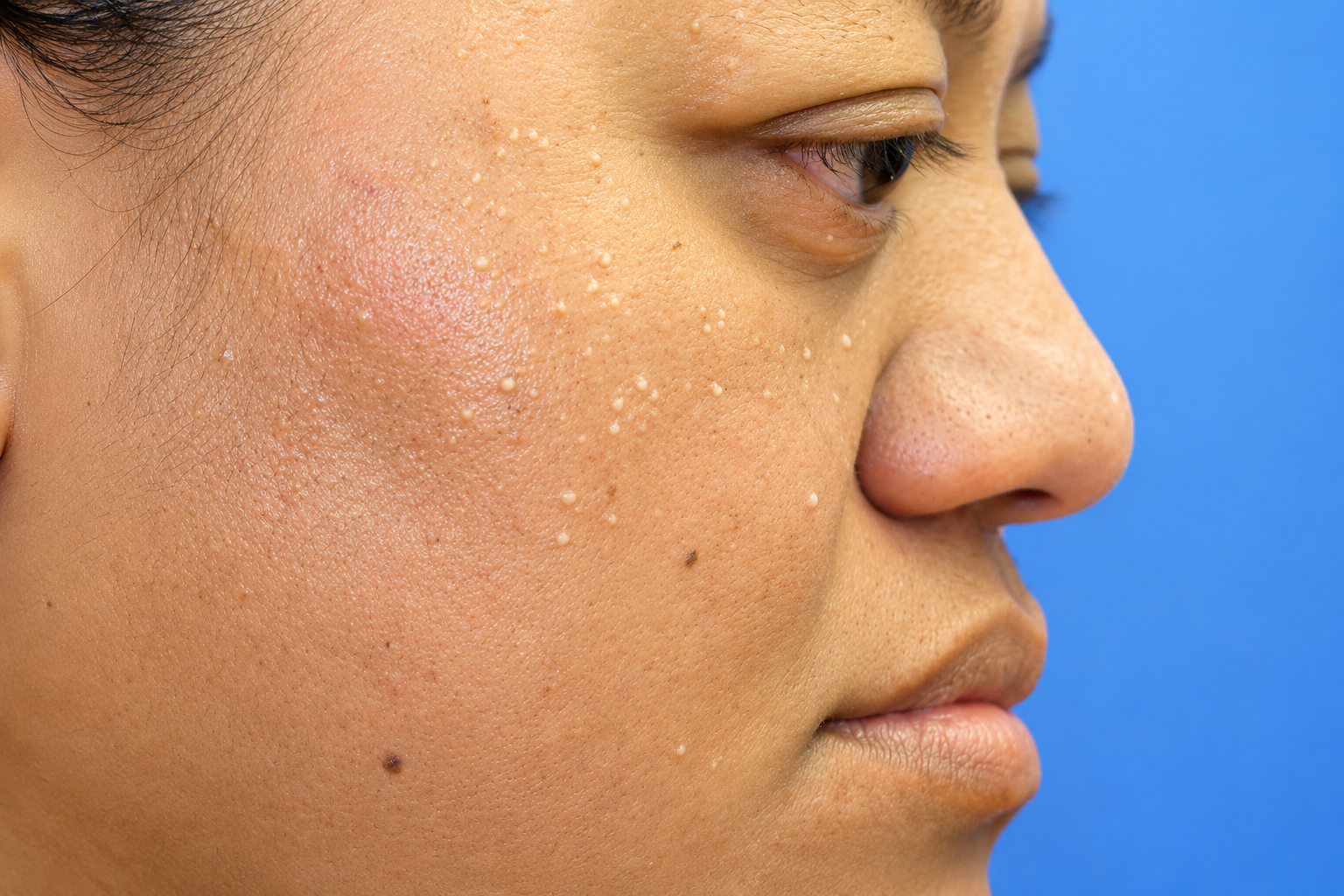
Milia are tiny, pearly-white or yellowish bumps that form just under the surface of the skin. They're extremely common, harmless, and easily treated in clinic if you'd like them removed. Milia are often mistaken for blackheads, however, a milium does not have an opening unlike blackheads. Milia are purely a cosmetic concern, and many people choose to leave them alone. For those who prefer to have them removed, an in-clinic procedure is a potential treatment option.
What is Milia?
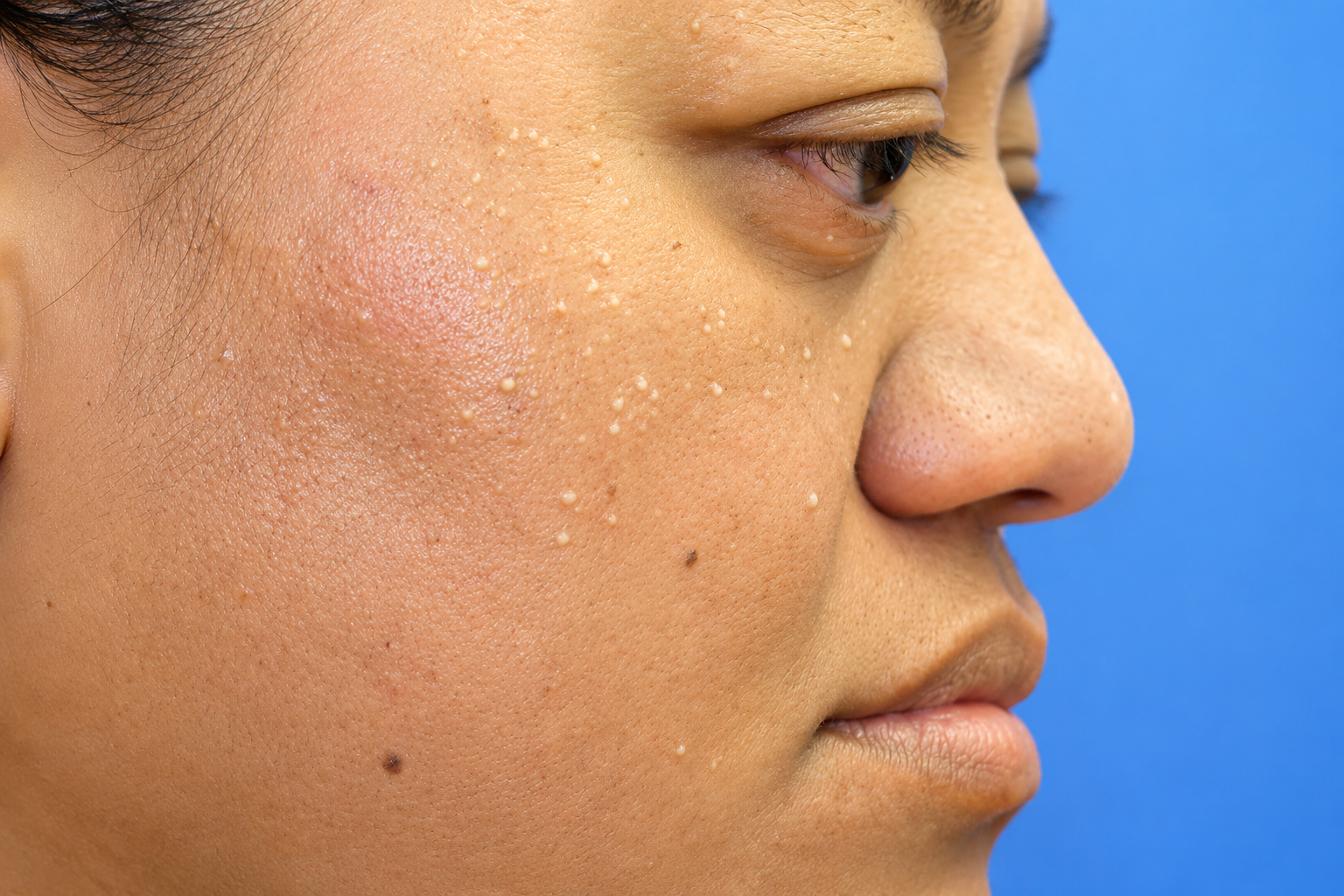
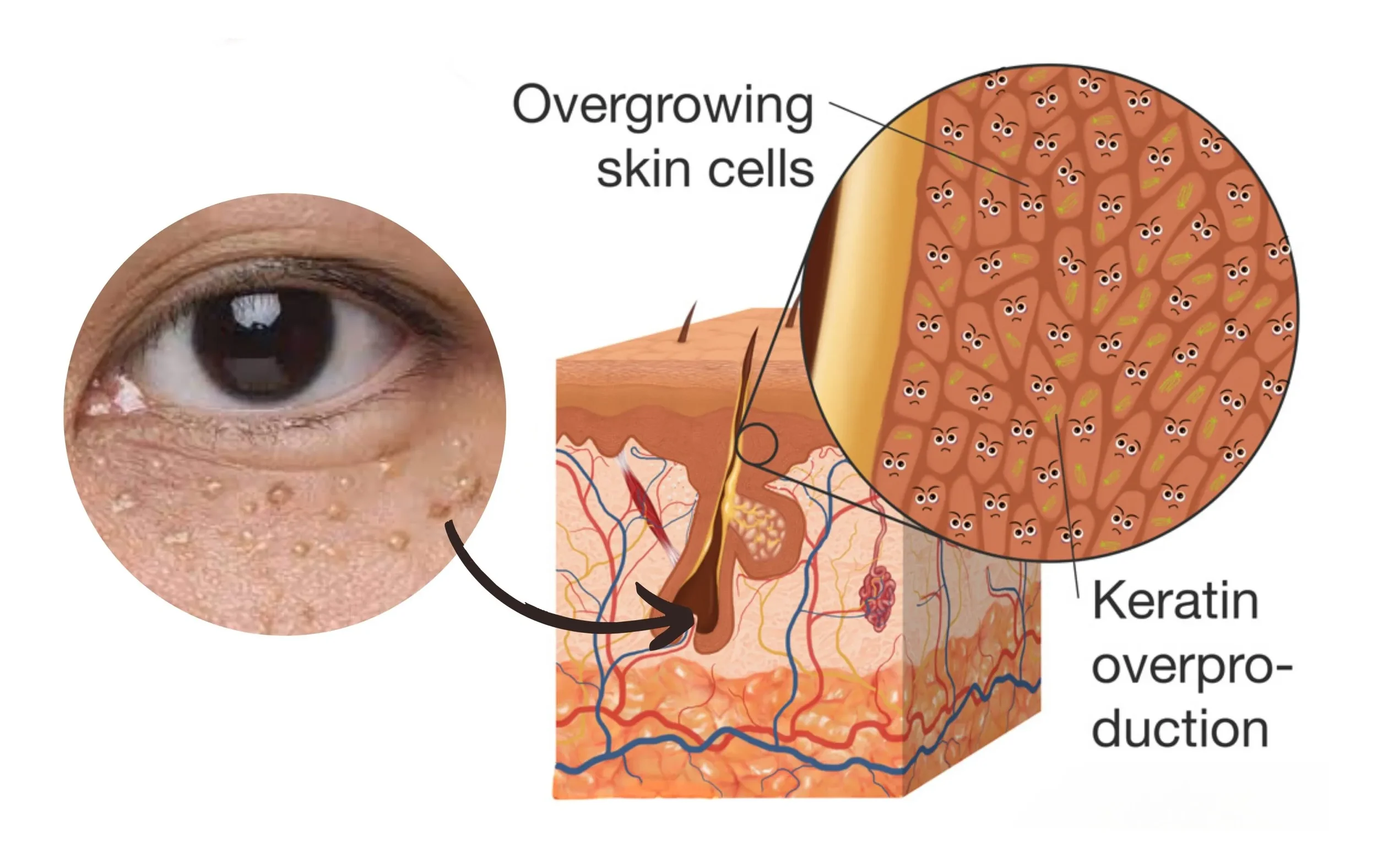
A milium is a small cyst containing keratin, the protein that makes up the outer layer of skin. When there are several, they're known as milia. They're common in people of all ages, and most often appear on the face, particularly around the eyelids and cheeks, though they can occur elsewhere on the body. DermNet
Milia form when keratin becomes trapped just beneath the skin's surface rather than shedding normally. They can appear on their own or develop after skin damage, such as blistering, burns, long-term use of steroid creams, or following procedures like dermabrasion or laser resurfacing.
Milia are not acne and won't respond to acne treatments. They're not painful or itchy, and they don't carry any health risk. Many people choose treatment simply because they'd prefer smoother-looking skin.
Credit: ncbi Bookshelf
Treatment Options
Milia don't always need treatment, and some resolve without intervention. If you'd like yours removed, this is a simple in-clinic procedure. Your practitioner will assess your skin and recommend the most suitable approach.
Common options include:
Extraction: a small, sterile instrument is used to gently open the surface of the milium so the trapped keratin can be expressed
Diathermy: heat is used to soften and release the contents of the milium
Cryotherapy: liquid nitrogen is applied to freeze and break down the milium
We never recommend trying to squeeze or pick at milia at home, as this can lead to irritation, infection, or scarring without actually removing the contents. Milia do not have ‘openings’ like acne.
Credit: Cureskin
Risks and Potential Side Effects of Treatment
As with any skin procedure, there are some things to be aware of:
Temporary redness, swelling, or a small scab at the treatment site
Mild discomfort during the procedure, depending on the technique and location
A risk of infection, scarring, or temporary skin colour change
New milia developing over time in the same or other areas, particularly if the underlying cause (such as ongoing skin damage or product use) continues
Milia close to the eyelid margin may need a different approach, and in some cases referral to an ophthalmologist if appropriate
Frequently asked questions
-
No. Whiteheads form when a pore becomes blocked with oil and dead skin cells, and they're related to acne. Milia are keratin-filled cysts unrelated to pores or oil production, and they have a firmer texture. Your practitioner can tell the two apart on examination.
-
Sometimes, particularly in babies, where they often resolve without treatment. In adults, milia can persist for a long time if left alone, though some do clear up gradually.
-
We highly recommend against popping or squeezing milia. The keratin sits beneath unbroken skin, so squeezing usually will not remove it and can cause irritation, scarring, or infection instead.
-
Most people find the procedure mild and well tolerated. You may feel a brief pinch or cold sensation, depending on the technique used. If local anesthetic is used, you may feel an uncomfortable stinging sensation at the injection site.
-
The specific lesions treated shouldn't return, but new milia can develop over time in the same area or elsewhere, especially if the underlying cause persists.
-
Milia are common on the eyelids and can usually be treated safely in this area with appropriate care. Your doctor will take extra precautions given the delicate skin and proximity to the eye.
Disclaimer: This information is for general educational purposes and does not constitute individual medical advice. Always consult with a qualified health professional regarding your specific health needs.