
Xanthelasma
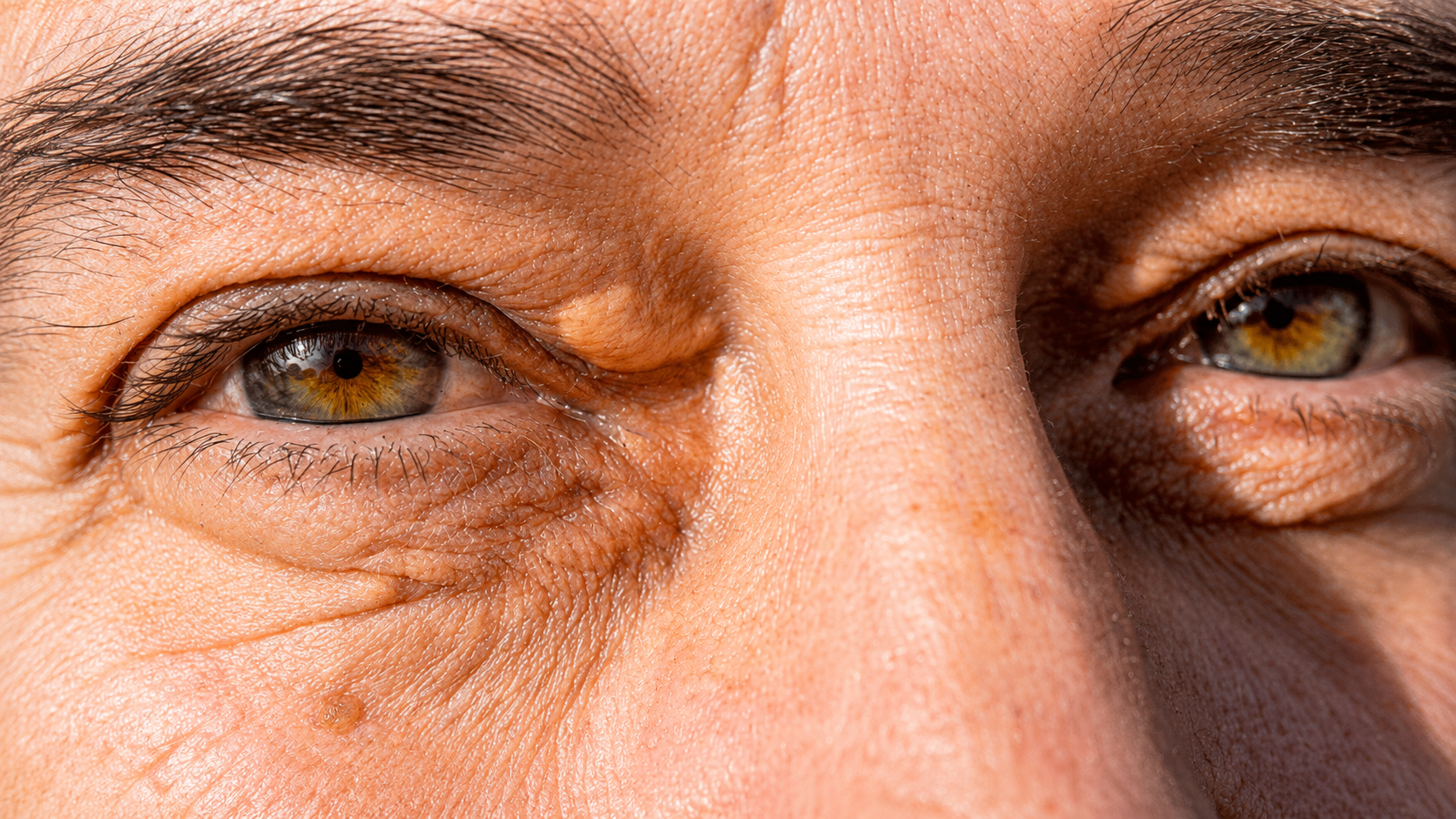
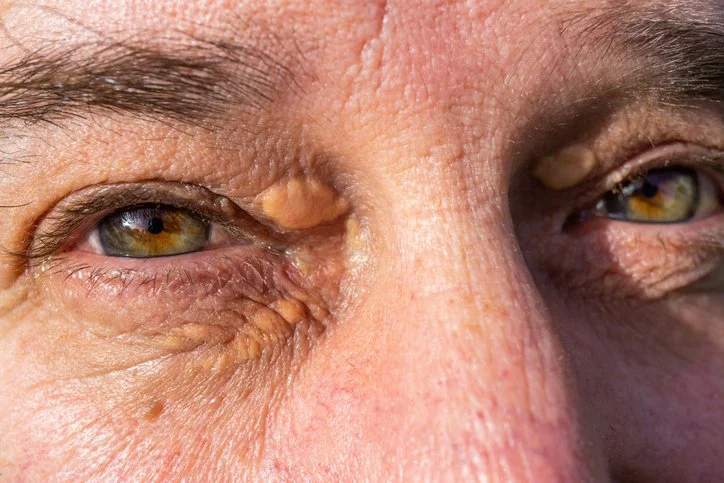
Xanthelasma are soft, yellow patches or plaques that develop on the eyelids, most often near the inner corner, or sometimes on the elbows. Xanthelasma are a common and harmless skin finding but there are treatment options for cosmetic purposes.
What is Xanthelasma?
Xanthelasma is a type of fatty deposit that forms just under the skin of the eyelid. It usually starts as a small, flat patch and grows slowly over months or years. It can appear on one eyelid or several, and often develops symmetrically on both sides.
Xanthelasma is linked to cholesterol levels, and it can occur in people with high cholesterol or other lipid disorders. That said, it's also common in people with normal blood lipid levels. Because of this association, our GPs may suggest a lipid profile and general health check as part of your consultation, particularly if you haven't had one recently.
Xanthelasma itself doesn't cause pain or affect vision. It's a cosmetic concern for most people, not a medical one, though identifying and managing any underlying cholesterol issue is worthwhile for general health reasons.
Treatment options
Xanthelasma doesn't go away on its own, and treating an underlying cholesterol problem doesn't reliably make existing patches disappear. If you'd like the patches removed, we offer two in-clinic options.
Diathermy
Diathermy uses targeted heat to gently break down the fatty deposit in the skin. It's performed under local anaesthetic and is a quick in-room procedure. Some redness, swelling, or crusting at the treatment site is expected afterwards, and this generally settles over one to two weeks.
Chemical peel (trichloroacetic acid)
A trichloroacetic acid (TCA) peel can be used to treat xanthelasma. The acid is carefully applied to the affected area, causing the treated skin to peel away over the following days. This is usually done as a series of treatments rather than a single session, depending on the size and thickness of the patches.
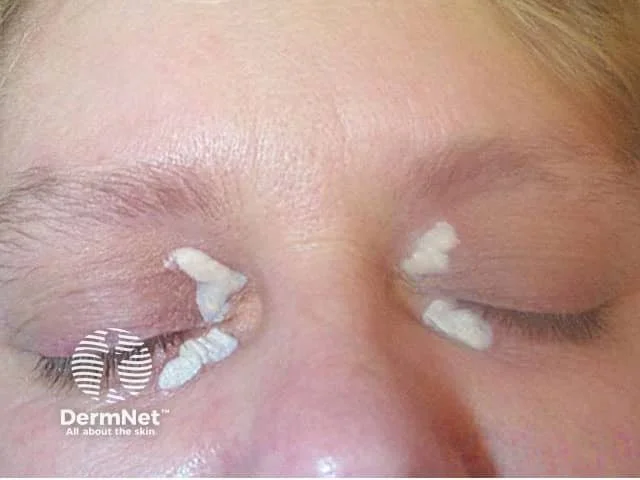
Xanthelasma post-treatment, before peeling occurs. Copyright: © DermNet
Risks and side effects
As with any skin procedure, diathermy and TCA peel treatment for xanthelasma carry some risk of side effects. Your practitioner will discuss these with you in detail before treatment, and individual experience varies.
Common, temporary effects
Redness, swelling, or stinging in the treated area
Crusting or scabbing as the skin heals
Discomfort during and shortly after the procedure
Less common risks
Changes in skin pigmentation around the treated area, which may be temporary or, less often, permanent
Scarring or textural changes to the eyelid skin
Eyelid swelling that temporarily affects how the eye area looks or feels
Infection at the treatment site
Under-treatment, requiring further sessions, or over-treatment of the area
Xanthelasma can return after treatment, even when the initial result is good. This is more likely if cholesterol or other lipid levels remain elevated, which is part of why we may suggest a lipid check alongside treatment.
Because the skin around the eyes is thin and sensitive, your practitioner will tailor the treatment approach to reduce these risks where possible. Not everyone is a suitable candidate for every option, and a consultation is required to assess your skin and discuss what's realistic for your situation.
Frequently asked questions
-
No. Xanthelasma is a benign skin finding and doesn't affect vision or eye health. It's generally treated for cosmetic reasons rather than medical ones. That said, it can be associated with high cholesterol, so your practitioner may suggest a lipid check as part of your assessment.
-
Not necessarily. Xanthelasma is linked to cholesterol and lipid disorders in some people, but it also occurs in people with normal blood lipid levels. A simple blood test can clarify this.
-
Not reliably. Managing an underlying cholesterol issue is worthwhile for your general health, but it doesn't tend to remove patches that have already formed. Treatment of the patches themselves is usually needed if you want them gone.
-
Diathermy uses heat under local anaesthetic to break down the deposit in a single in-room procedure. A TCA peel uses a chemical solution applied to the area, usually over a series of sessions, causing the treated skin to peel away gradually. Your practitioner can advise which approach suits your skin and the size of your patches.
-
Diathermy is performed under local anaesthetic, so discomfort during the procedure is minimal. A TCA peel can cause a stinging or burning sensation during application. Both can involve some discomfort during healing.
-
This depends on the size, thickness, and number of patches. Diathermy may only need one session per patch, while TCA peels are often done as a series. Your practitioner will give you a clearer picture after assessing your skin.
-
Some redness, swelling, or crusting is expected after either treatment, generally settling over one to two weeks. Most people return to normal activities quickly, though you may prefer to plan around any social commitments while the area heals.
-
Yes, it can recur, particularly if cholesterol or lipid levels remain elevated. This is why we may suggest ongoing monitoring alongside cosmetic treatment.
-
There's a risk of changes in skin pigmentation or texture around the treated area, which can be temporary or, less often, permanent. Your practitioner will talk through this risk and how it's minimised before you proceed.
-
A consultation is needed to assess your skin and suitability. Not everyone is a candidate for every option, and your practitioner will recommend the approach best suited to you.
Disclaimer: This information is for general educational purposes and does not constitute individual medical advice. Always consult with a qualified health professional regarding your specific health needs.