

Ingrown Toenails
What Is an Ingrown Toenail?
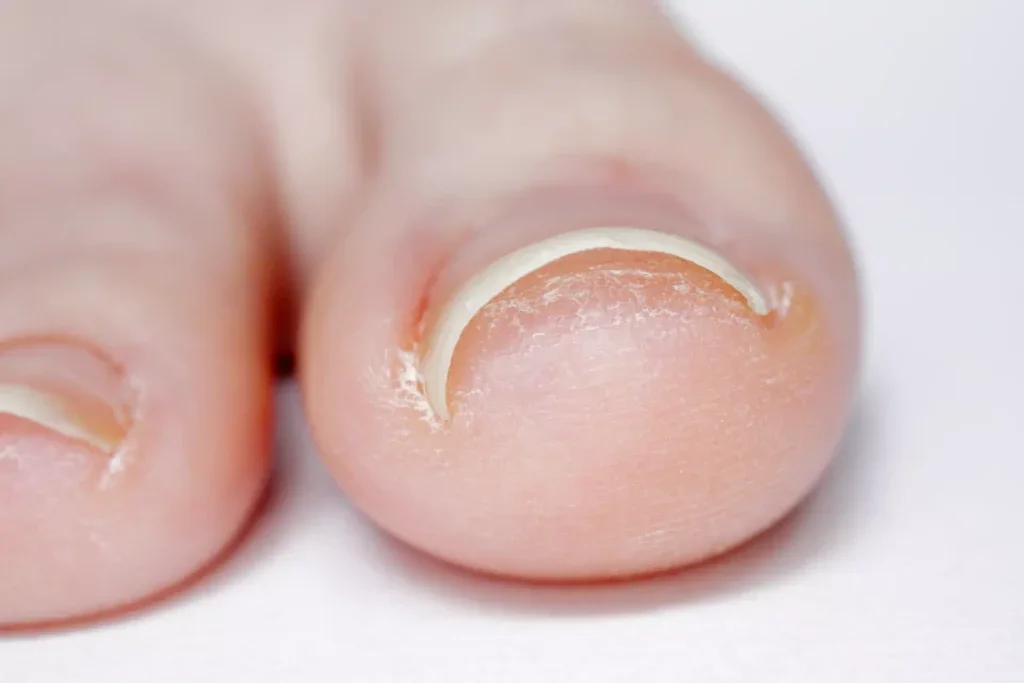
An ingrown toenail (onychocryptosis) occurs when the edge or corner of a toenail grows into the surrounding skin rather than over it. This causes irritation, inflammation and, if untreated, infection of the nail fold. It most commonly affects the big toe but can occur on any toe. Ingrown toenails are a common condition and can affect people of any age, though they are more frequent in teenagers, young adults and older people.
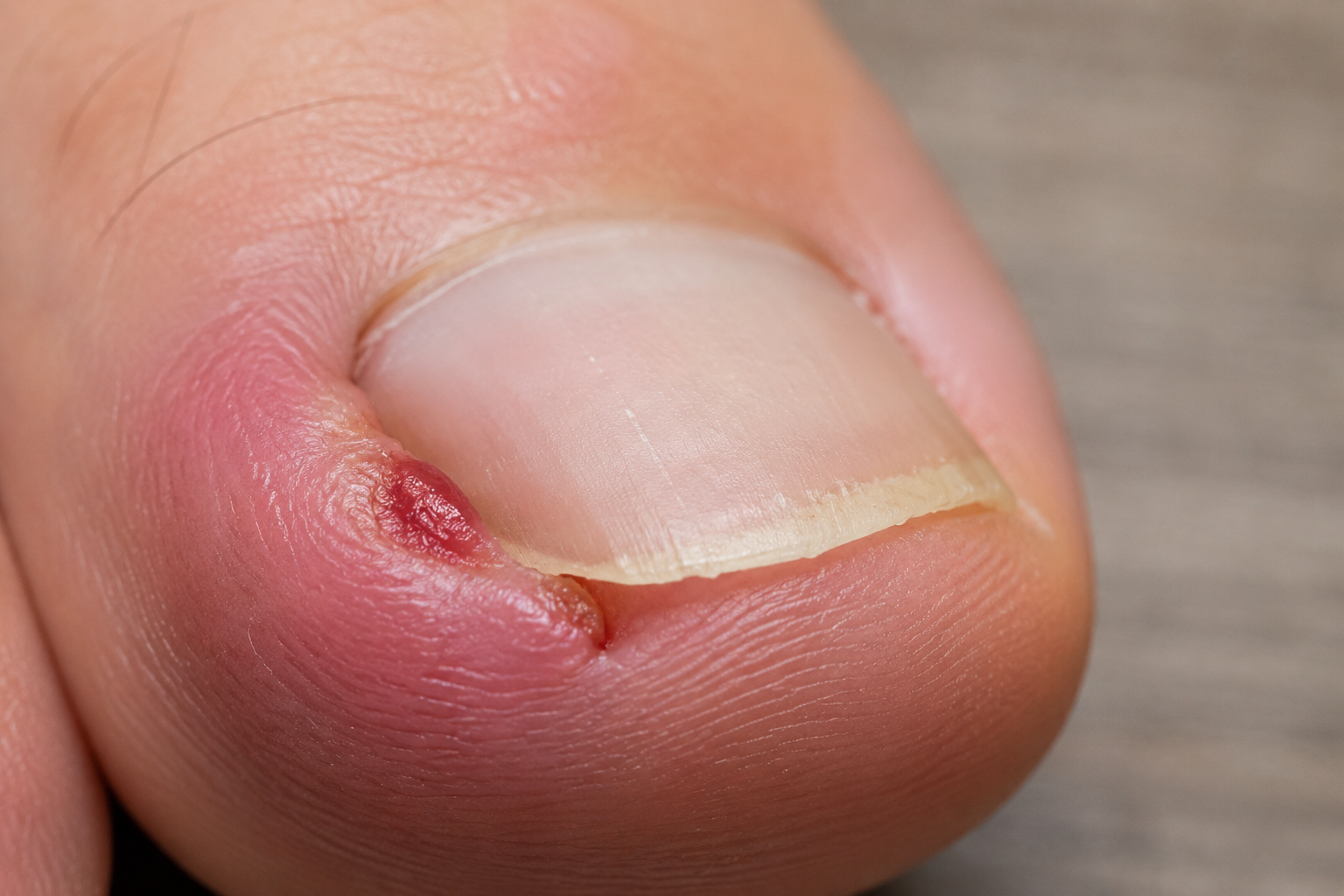
Credit: Complete Podiatry
Common Causes of Ingrown Toenails
Cutting toenails too short or rounding the corners instead of cutting straight across
Tight or ill-fitting footwear that compresses the toes
The natural shape of the nail, including nails that curve inward
Injury to the toe, such as stubbing or dropping something on it
Fungal nail infections, which can thicken or distort the nail
Excessive sweating of the feet
Genetic factors
Activities that place repeated pressure on the toes, such as long-distance running
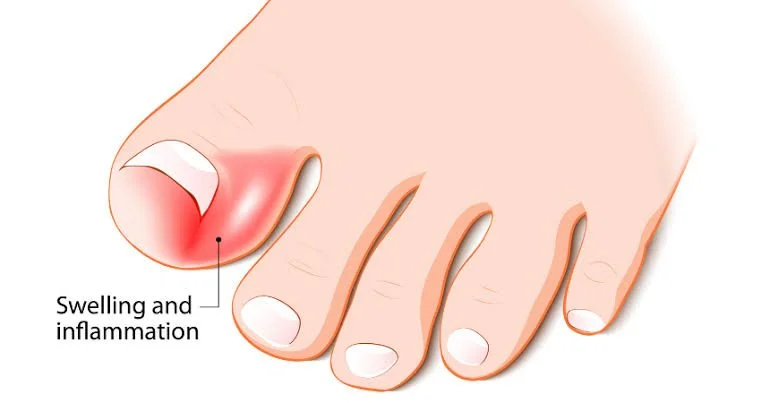
Credit: Centre for Advanced Foot and Ankle Surgery
Symptoms to Watch For
Pain and tenderness along one or both sides of the nail
Redness and swelling of the skin next to the nail
Skin that feels warm to touch
Fluid or pus discharge, which may indicate infection
Overgrowth of tissue around the nail edge in longer-standing cases
If you have diabetes or a condition affecting circulation, seek advice from your GP or podiatrist promptly rather than attempting to manage an ingrown toenail yourself, as these conditions increase the risk of complications and ulcers.
How We Treat Ingrown Toenails
Treatment depends on the severity of the ingrown toenail and whether infection is present. Dr David Scott will assess your toe and discuss which option is appropriate for your circumstances.
Management for mild cases
For mild cases. This may include warm water soaks, correct nail trimming technique, and packing a small piece of cotton or dental floss under the nail edge to guide regrowth. Conservative management is not always effective for moderate to severe ingrown toenails, and symptoms may persist or worsen if the underlying cause is not addressed.
Partial nail avulsion
A procedure which removes the ingrown portion of the nail under local anaesthetic.
Risks: Bleeding, infection, temporary or ongoing sensitivity, and possible regrowth of the ingrown section if the nail matrix is not treated.
Partial nail avulsion with chemical matrixectomy (phenolisation)
The ingrown section of nail is removed and the corresponding part of the nail matrix is treated with a chemical agent to reduce the likelihood of that section regrowing.
Risks: Bleeding, infection, prolonged drainage from the treated area during healing, delayed healing, changes to nail shape, and a small chance of recurrence.
Surgical wedge excision
A more involved procedure to remove a wedge of nail and adjacent soft tissue, generally reserved for recurrent or more severe cases.
Risks: Bleeding, infection, scarring, longer recovery time, and reaction to local anaesthetic.
All procedures carry a risk of recurrence, and individual healing times vary. Dr David Scott will explain the risks relevant to your specific case before proceeding.
How to Prevent Ingrown Toenails
Cut toenails straight across, level with the end of the toe, avoiding rounded corners
Avoid cutting nails too short
Choose shoes with enough room in the toe box and avoid tight or narrow footwear
Wear clean, well-fitting socks
Keep feet clean and dry to reduce the risk of fungal infection
Inspect your feet regularly, particularly if you have diabetes or reduced sensation in your feet
If you are experiencing pain, swelling or discharge from an ingrown toenail, book an appointment with our team for assessment and treatment options.
This information is general in nature and does not replace individual medical advice. Please consult one of our practitioners to discuss your specific situation.
Frequently asked questions
-
Mild cases can sometimes settle with correct nail trimming, well-fitting footwear and warm water soaks. Moderate to severe cases, or those with signs of infection, usually need professional treatment.
-
Procedures such as partial nail avulsion are performed under local anaesthetic, so the toe is numbed beforehand. Some tenderness during healing is common. Patient may feel a brief stinging sensation when receiving the local anaesthetic via needle.
-
Recovery time varies depending on the procedure and individual healing. Your practitioner will give you an estimate and aftercare instructions specific to your treatment.
-
With partial nail avulsion alone, the treated section can regrow and become ingrown again. Adding chemical matrixectomy reduces this likelihood by treating the nail matrix, though recurrence is still possible.
-
If you have diabetes or a circulatory condition, let your practitioner know before treatment, as these conditions can affect healing and increase the risk of complications.
-
See a practitioner if you have pain, redness, swelling, discharge, or if you have diabetes, poor circulation, or a compromised immune system.
-
No, you do not need a referral to see Dr David Scott. However, you are welcome to bring any documents related to your medical history.
Disclaimer: This information is for general educational purposes and does not constitute individual medical advice. Always consult with a qualified health professional regarding your specific health needs.